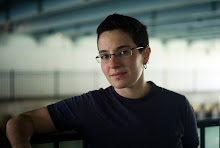
This week's Time Out Chicago, entitled "Everyone's a Critic", looks at the world of blogging and who's opinion counts. While most of the blog-related articles focused on food, books editor Jonathan Messinger managed to get his two cents in:
"Book blogs tend to all look alike after a while--they get bogged down in the New York publishing industry minutiae or enrapt with hot-shit authors du-jour. But Chicago blogs possess the same qualities as the city we love: They're both cosmopolitan and provincial, and tend to favor the underdog."
I'm not sure if I totally agree with this one, since most of the blogs I read tend to favor the underdog and only two are from Chicago. Isn't the goal for anyone blogging about the publishing industry to serve as a voice for those who don't have one?
In my mind, everyone knows the next Jack Reacher book is going to be fantastic. They don't need me to tell them. It's the books from Soho press, Bleakhouse, and other independent presses that need the support of blogs. While print magazines such as Crimespree and Mystery Scene do a great job of supporting the underdogs, they are not as accessible as blogs. Anyone punching key words into Google can stumble upon a review I wrote last year, but it's much harder to find back issues of print magazines and even then, it costs a few bucks. And what about all the print reviews my editors choose not to run? Why should the author lose press because the publication doesn't have the space? Blogs are the perfect consolation prize. The review may not have made it into the Sun-Times, but I can still deliver a bit of press.
I used to write for the Not For Tourists website, covering everything from museums and parks to bars and restaurants. I'm not a foodie nor a recreation expert. I got the job because I know Chicago and I can write. Does my opinion count less than that of a food critic? Perhaps. Maybe they'd notice presentation and hints of spices that fly right past me. But are those reading my review foodies or are they real Chicagoans looking for a good place to eat that night? While there is a lot of hate toward the "amateur reviewer" really, what are the credentials?
I've touched on this in a previous post so I won't go too much into it, but this article does beg the question of authority. When it comes to food, I do think it depends on the audience. If the publication is like Time Out, serving the urban public, I don't think you necessarily have to go to culinary school to be a food critic. With things like books and movies, some background helps, but I'm not sure it's necessary. Ultimately, what makes your opinion count is your track record. If you continuously recommend good books and warn readers of the bad ones, you will build authority and a meaningful opinion.
The reason I blog is the same reason I enjoy freelancing: I want to give press to those who don't get a lot of it. I love writing about local bands, indy publications and diamond-in-the-rough restaurants. I don't think my sentiment is exclusive to Chicago. Isn't this why we all started blogging?
Friday, January 25, 2008


Friday, January 18, 2008
What To Know
The ancient Greeks said it best: know thyself. As people, especially as writers, it is amazing how little we know about ourselves. But I'm beginning to realize more and more that knowing thyself is necessary to succeed in this crazy business.
- Know your strengths and weaknesses. Utilize your strengths while you work to improve your weaknesses.
- Know your work habits. Know whether you work best during the day or at night, if you work quickly or slowly, carefully or carelessly. Know if you prefer writing first drafts or if you love the revision process. Know when you procrastinate and know when you need a break.
- Know your goals. Without goals you have no direction. Even if the ultimate goal changes along the way, you have to know where you're running to.
- Know your limits. I've been chasing down an article subject for over a week now trying to get an interview. The deadline is Tuesday. I know that the last possible time I can get the interview and still make my deadline is Monday evening. Anything past eleven, I can't work effectively and waking up at 5am to send something off for a 9am deadline isn't reasonable. Don't make promises you can't keep. If an editor asks for a tight deadline or if your publicist wants you to visit 20 bookstores in one day, don't say yes if you can't do it.
- Know your priorities. Yes, I think we all put writing as a top priority, but there are other things that are important as well. Should you be attending a book launch or attending your child's school play? Have drinks with a visiting author or have drinks with your girlfriend/boyfriend? Call your agent or call your parents? It's easy for anyone to get wrapped up in their career, but I find it's even easier for writers. Know that there are things besides writing and promoting that are important and know where those things stand on your list of priorities.
- Know thy gut. I've found that the gut never lies. If something isn't sitting well with you, chances are, it's wrong. You can know the facts, know the stats, know the norm, but ultimately, you gotta go with your gut.
Tuesday, January 15, 2008
In Case You Haven't Read...
Ah, Tess, always so wise! In case you haven't read her two latest blog post, they are definitely worth checking out. The first speaks to me as a writer who reads and the second speaks to me as a reader who writes...
Friday, January 11, 2008
How To Fix The Non-Readers
All of us, at one time or another, have come into contact with a person that tells us, “I don’t read.” For whatever reason, this person has decided that it is not enjoyable to pick up a book and have someone tell them a story. They’d prefer to watch movies, or TV, listen to music or play video games. Maybe it’s optimistic of me, but I truly believe people don’t read because they’ve tried the wrong books.
Lame Excuse #4: I can’t concentrate enough to follow a story. My mind wanders too much.
The Fix: Give them something they can’t put down, something that is too gripping to not pay attention. No Time For Goodbye by Linwood Barclay, Tell No One by Harlan Coban, Gravity by Tess Gerritsen or At The City’s Edge by Marcus Sakey.
Lame Excuse #5: I’d much rather read the newspaper or a magazine.
The Fix: Usually, this person likes to keep up with current events and be knowledgeable of what’s going on in the world. Therefore, I’d recommend: Londonistan by Melanie Phillips, An Inconvinient Truth by Al Gore, Nickel and Dimed by Barbara Ehrenreich, or for something lighter, I Am America by Stephen Colbert. Note, I don't usually read these types of books, but all of these have been recommended by those that do.
For me, reaching out and addressing these lame excuses isn’t only about increasing readership. It’s about introducing someone to a wonderful, eye opening activity, something that they will benefit from and enjoy for years. What’s the non-reader in your life’s lame excuse and what can you do to fix it?
The Antidote for the Non-Reader:
Lame Excuse #1: I can’t concentrate on something that long.
The Fix: A short story collection. They can finish a full story in one sitting and don’t have to remember large casts of characters or follow in depth plot twists. Depending on their tastes, I would recommend Drown by Junot Diaz, Expletive Deleted edited by Jennifer Jordan, or Magical Thinking by Augusten Burroughs.
The Fix: A short story collection. They can finish a full story in one sitting and don’t have to remember large casts of characters or follow in depth plot twists. Depending on their tastes, I would recommend Drown by Junot Diaz, Expletive Deleted edited by Jennifer Jordan, or Magical Thinking by Augusten Burroughs.
Lame Excuse #2: I don’t have time.
The Fix: Audiobooks. That way the busier-than-thou person in your life can experience a book while driving or working out. I’d stay away from anything too heavy, usually these people are stressed out and someone light like David Sedaris or Jennifer Cruise will make them laugh and maybe not take themselves too seriously.
The Fix: Audiobooks. That way the busier-than-thou person in your life can experience a book while driving or working out. I’d stay away from anything too heavy, usually these people are stressed out and someone light like David Sedaris or Jennifer Cruise will make them laugh and maybe not take themselves too seriously.
Lame Excuse #3: I’m a teenager who’s too cool to read.
The Fix: Hairstyles of the Damned by Joe Meno, Perks of Being a Wallflower by Stephen Chbosky, or Every Crooked Pot by Renee Rosen. If the cranky teenager in your life skateboards, listens to punk music, dresses all in black or dies their hair primary colors, I’d also recommend American Skin by Don De Grazia and Please Kill Me: An Oral History of Punk by Legs McNeil and Gillian McCain.
The Fix: Hairstyles of the Damned by Joe Meno, Perks of Being a Wallflower by Stephen Chbosky, or Every Crooked Pot by Renee Rosen. If the cranky teenager in your life skateboards, listens to punk music, dresses all in black or dies their hair primary colors, I’d also recommend American Skin by Don De Grazia and Please Kill Me: An Oral History of Punk by Legs McNeil and Gillian McCain.
Lame Excuse #4: I can’t concentrate enough to follow a story. My mind wanders too much.
The Fix: Give them something they can’t put down, something that is too gripping to not pay attention. No Time For Goodbye by Linwood Barclay, Tell No One by Harlan Coban, Gravity by Tess Gerritsen or At The City’s Edge by Marcus Sakey.
Lame Excuse #5: I’d much rather read the newspaper or a magazine.
The Fix: Usually, this person likes to keep up with current events and be knowledgeable of what’s going on in the world. Therefore, I’d recommend: Londonistan by Melanie Phillips, An Inconvinient Truth by Al Gore, Nickel and Dimed by Barbara Ehrenreich, or for something lighter, I Am America by Stephen Colbert. Note, I don't usually read these types of books, but all of these have been recommended by those that do.
For me, reaching out and addressing these lame excuses isn’t only about increasing readership. It’s about introducing someone to a wonderful, eye opening activity, something that they will benefit from and enjoy for years. What’s the non-reader in your life’s lame excuse and what can you do to fix it?
Tuesday, January 01, 2008
New Skin and New Review
Thought I'd give the blog a makeover to ring in the New Year. Enjoy!
Also, check out my review of Ian Rankin's The Naming of the Dead on eMusic.com.
Also, check out my review of Ian Rankin's The Naming of the Dead on eMusic.com.
Monday, December 31, 2007
Writing Resolutions
I'm back from my brief hiatus, fully recovered from the flu, back from seeing family, and just in time for the writer's New Year's resolutions. I did it last year and like J.A. Konrath, I've decided to make it a tradition and add a few more:
- Never Give Up Sure, there have been plenty of times when I've considered packing up my laptop, getting out my resume and searching for a real job. There have been rejections that hit below the belt, articles that were cut at the last minute, and books that haven't sold. But nothing worth having is easily obtained. You have to fight for it.
- Be More Productive Maybe this New Year's eve, instead of going out and partying, you can spend it getting organized and coming up with a plan. It's a given that there aren't enough hours in the day, but the real problem is, how you spend those hours. Take some time and organize your desk, get a day planner, make a task manager and a set of future goals. If you spend less time trying to find a dictionary or trying to remember what article was due when, you can spend more time actually writing.
- Submit Submit Submit Even if you don't have a book finished, you should still be submitting on a regular basis. Short stories, book reviews, magazine articles, anything that can put your name out there and earn you a publication credit. Never been published? Online zines don't pay, but they're a lot more likely to take a chance on a newbie writer. Once you get your foot in the door, you can go after the paying gigs.
- Promote Promote Promote This applies to the newbies as well as the published writers. People have bad memories and even worse brand loyalty, so writers constantly have to promote in order to remind the reading public who they are. Don't have a book coming out? Blog, write articles, talk on a panel, make yourself known. Still getting started? Attend conferences, submit short stories, comment on author blogs, sign up for Backspace, put yourself out there as an aspiring novelist. The people you meet not only are the ones you'll be looking to for blurbs, but they're readers as well.
- Team Up Two heads are better than one and ten are even better. This year, be a part of a writing community by attending readings, forming a critique group and going to writer's conferences. The act of writing may be a solo sport, but the rest of the job doesn't have to be.
- Read and Write More As always, the more you read and the more you write, the better you get. Everyone, even Norah Roberts and James Patterson, could stand to read and write a little more. Did you write a thousand words a day consistently in 2007? Try for 1500 in 2008. Read about a book a month last year? Try to up it to two.
Have a wonderful and productive new year and feel free to leave your own writing resolutions.
Wednesday, December 12, 2007
My Point of View
Back in grade school, in your language arts class, you learned that there were three different points of view: first, second and third, I, you and he/she. Then in high school, maybe college, you learned that there were different types of third person: close third, third person omniscient, etc. If I remember correctly, though it hasn't been that long, most books I read picked one point of view and stuck with it. If they picked first, I was with one character for the entire novel. If they picked third, they could skip around between characters from chapter to chapter. If they picked second, their names were Chuck Palahniuk or Hubert Selby Jr.
Each had its benefits and limitations. First person allows readers to get close to the character, really get inside their head. But the reader can only see what the character sees, know what the character knows, which can be very limiting. Third person allows for more freedom. The reader can follow numerous characters in the book, often knowing more than the protagonist does. But because there is a narrator other than the protagonist, it can be difficult to get close to the characters and really hear their voices. I won't even touch on the benefits and difficulties with second person. Maybe on another post.
But the last few books I've read got greedy. They couldn't settle on just one POV. The authors told the protagonist story line in first person but then added chapters of third. They took the benefits from each point of view and got rid of the limitations. We, as readers, are close to the main character because we're in his/her head, but we gain bigger knowledge of the story because of the third person chapters and learn things before the protagonist does. Genius or cheating?
I personally lean toward close third person. I like using multiple view points to create a sense of sprawl, to indicate the story is bigger than just the one character. But the manuscript I'm working on seems to lend itself to first person. My main character, Dani, has a strong voice and I feel it's being hindered by the third person POV. But in order to make the story work, I need to include chapters from the POV of other characters. So why don't I take my cue from these novelists and have my cake and eat it too? Because something doesn't feel right about it. Personally, it feels like I'm cheating.
I had a professor tell me that a novel was a problem and it was the author's duty to solve it. I think that's the perfect way to put it. There is so much emphasis on conflict and raising the stakes, we put our characters through hell so it seems that there's no way they can possibly triumph. But it's our job to ensure that they do. In my mind, I feel that it is also the author's job to fix the problem within the realms of believability and without coincidence. I once read a horrible mystery novel that the killer had a woman trapped in a house and, luckily, she found a gun in the nightstand. How convenient.
The previous example is flat out cheating, the shifts in POV don't fall into that category. But to me, it's the idea of convenience. These authors had a story to tell and they wanted to tell it in a certain way. They wanted to get the characters' voices on the page, but they also needed to include scenes that the protagonist wasn't a part of. So they took the convenient route, the easy route and wrote two different viewpoints. Nothing wrong with that. They're not breaking any rules. But personally, I don't know if I can do it.
Disclaimer: the two particular books I have in mind were great. I really enjoyed reading them. I thought they were well written, interesting, and well thought out. My comments are not on the authors or the books, but on the technique itself. I'd love to hear everyone's thoughts on this. Is it cheating to switch from first to third? Is it the easy way out? Or is this technique appealing and just as valid?
Each had its benefits and limitations. First person allows readers to get close to the character, really get inside their head. But the reader can only see what the character sees, know what the character knows, which can be very limiting. Third person allows for more freedom. The reader can follow numerous characters in the book, often knowing more than the protagonist does. But because there is a narrator other than the protagonist, it can be difficult to get close to the characters and really hear their voices. I won't even touch on the benefits and difficulties with second person. Maybe on another post.
But the last few books I've read got greedy. They couldn't settle on just one POV. The authors told the protagonist story line in first person but then added chapters of third. They took the benefits from each point of view and got rid of the limitations. We, as readers, are close to the main character because we're in his/her head, but we gain bigger knowledge of the story because of the third person chapters and learn things before the protagonist does. Genius or cheating?
I personally lean toward close third person. I like using multiple view points to create a sense of sprawl, to indicate the story is bigger than just the one character. But the manuscript I'm working on seems to lend itself to first person. My main character, Dani, has a strong voice and I feel it's being hindered by the third person POV. But in order to make the story work, I need to include chapters from the POV of other characters. So why don't I take my cue from these novelists and have my cake and eat it too? Because something doesn't feel right about it. Personally, it feels like I'm cheating.
I had a professor tell me that a novel was a problem and it was the author's duty to solve it. I think that's the perfect way to put it. There is so much emphasis on conflict and raising the stakes, we put our characters through hell so it seems that there's no way they can possibly triumph. But it's our job to ensure that they do. In my mind, I feel that it is also the author's job to fix the problem within the realms of believability and without coincidence. I once read a horrible mystery novel that the killer had a woman trapped in a house and, luckily, she found a gun in the nightstand. How convenient.
The previous example is flat out cheating, the shifts in POV don't fall into that category. But to me, it's the idea of convenience. These authors had a story to tell and they wanted to tell it in a certain way. They wanted to get the characters' voices on the page, but they also needed to include scenes that the protagonist wasn't a part of. So they took the convenient route, the easy route and wrote two different viewpoints. Nothing wrong with that. They're not breaking any rules. But personally, I don't know if I can do it.
Disclaimer: the two particular books I have in mind were great. I really enjoyed reading them. I thought they were well written, interesting, and well thought out. My comments are not on the authors or the books, but on the technique itself. I'd love to hear everyone's thoughts on this. Is it cheating to switch from first to third? Is it the easy way out? Or is this technique appealing and just as valid?
Thursday, December 06, 2007
My First Bad Review
Yes, I'm a nerd who Googles her own name once a week, but here is a perfect example why: I found my first bad review, probably my first review period. No folks, you don't need to write a book to get criticism; all it takes is a short story.
Ann, Florida educator and online poet writes (on Everyone Loves a Leo from The Queer Collection):
"A prose piece by Dana Kaye describes the dance of a cocktail waitress as an 'epileptic seizure,' using an analogy that might disturb persons who suffer from epilepsy. Again, no intervention by the editor."
Therefore, I would like to publicly apologize to all of the epileptics I have disturbed or offended. It is my fault, and apparently the editor's, for not being more sensitive. And Miss Ann, I would encourage you to read on to the second paragraph of the story where it says that Michelle is a 16 year old visiting Tulane, not a cocktail waitress.
Ann, Florida educator and online poet writes (on Everyone Loves a Leo from The Queer Collection):
"A prose piece by Dana Kaye describes the dance of a cocktail waitress as an 'epileptic seizure,' using an analogy that might disturb persons who suffer from epilepsy. Again, no intervention by the editor."
Therefore, I would like to publicly apologize to all of the epileptics I have disturbed or offended. It is my fault, and apparently the editor's, for not being more sensitive. And Miss Ann, I would encourage you to read on to the second paragraph of the story where it says that Michelle is a 16 year old visiting Tulane, not a cocktail waitress.
Wednesday, December 05, 2007
Recently Read
After vigorously writing for 30 days straight, I'm finally getting a chance to catch up on my reading. While two of the books won't be out for another few weeks, they're definitely worth pre-ordering on Amazon or using all the Borders/Barnes and Noble gift cards you receive over the holidays:
 Dave White's debut kicks ass and takes names as he introduces the Jackson Donne series about a widower PI who drinks too much and often is on the receiving end of a punch. This first installment begins when Donne's friend is a victim of a hit and run, setting off a chain of events that turn Donne's world upside down. The characters are flawed yet likable, none are all good or all bad, which I find interesting. He's not afraid to take risks, giving the characters less-than-honorable traits and breaking the mold of a typical PI novel. White is a great writer and a master plotter and something tells me, he can only get better.
 Sakey's second novel blew me away and although it won't be out until January 22, it should be the first book you pick up in 2008, and I'm not just saying that. Discharged soldier, Jason Palmer, returns from Iraq to find a similar war raging in his south side Chicago neighborhood. When his brother is murdered, it is up to Jason to deliver justice, protect his nephew, and to grow up and be a man. It's gritty, suspenseful, and contains great social commentary on Chicago and the world at large.

 Dave White's debut kicks ass and takes names as he introduces the Jackson Donne series about a widower PI who drinks too much and often is on the receiving end of a punch. This first installment begins when Donne's friend is a victim of a hit and run, setting off a chain of events that turn Donne's world upside down. The characters are flawed yet likable, none are all good or all bad, which I find interesting. He's not afraid to take risks, giving the characters less-than-honorable traits and breaking the mold of a typical PI novel. White is a great writer and a master plotter and something tells me, he can only get better.Sakey's second novel blew me away and although it won't be out until January 22, it should be the first book you pick up in 2008, and I'm not just saying that. Discharged soldier, Jason Palmer, returns from Iraq to find a similar war raging in his south side Chicago neighborhood. When his brother is murdered, it is up to Jason to deliver justice, protect his nephew, and to grow up and be a man. It's gritty, suspenseful, and contains great social commentary on Chicago and the world at large.
Laura Caldwell got her start in Chick-Lit, inched toward Romantic Suspense, and although The Good Liar does revolve around a relationship, she has definitely crossed into the realm of espionage and international thriller. After a recent divorce, Kate Livingston didn't think she'd fall in love again so quickly. But when her friend Liza sets her up with a colleague, just to take her mind off her ex, they hit it off immediately and end up getting married. At first, the rush and spontaneity is romantic, but soon Kate realizes her husband isn't exactly who he seems, and neither is her friend. Another solid read, Caldwell kept me glued to my seat and flying through the pages, not letting up until the very end.
Friday, November 30, 2007
Waving the White Flag
With about 14 hours left of the Nanowrimo madness, I am officially throwing in the towel and calling it quits. It was a good run, I got a little over 40,000 words written, and although I had originally planned to glue my ass to the chair and churn out 10k words today, I decided against it. As much as I hate, HATE, quitting anything (I'm already having thoughts of abandoning the post and going for my word count) here's why I have come to this decision:
- Purpose Sometimes, things happen so fast that you lose sight of why you do them in the first place. Looking back on some of the assignments I've taken or conferences I've attended, I don't understand why I did it. That's the way I began to feel about Nano this year. I was churning out page after page, knowing that it wasn't any good and I kept telling myself it doesn't matter if it's good, just get your word count. Then I remembered, I've written a novel before. I've written three novels before. I have nothing to prove. The original purpose of Nano was to light a fire under me and to get me started on the story. It did. I've learned a lot about my characters and which plot lines are going to work (more like which one's aren't). But to sit here and churn out 10k bad words that I'm not going to use later just because of an internet challenge, serves no purpose.
- Time Although writing time did play a small role in my Nano short comings, a lot of it had to do with lack of preparation. Although I claim I seldom outline, which is true, I always have a mental outline drawn out in my head. This time, I didn't. I was just writing and writing and it seemed like I was going in circles. Some writers work like that, some writers end up surprising themselves (and therefore the reader) with plot twists and turning points they never expected to happen. I don't. My characters usually end up in a kitchen, talking about what's going on over cups of coffee (I don't know why). I kicked Nano's ass last year because I had a plan, because the story had been marinating inside me for so long that it couldn't wait to be told. So November, instead of being Novel Writing month, has been marinating month for me. I've had the time to realize my characters, work out some plot kinks, and in about a week I should be ready to start my story from the beginning.
- Self Control I know it sounds weird to quit a writing challenge because of self control, but let me explain. I am a competitive person and I'm only starting to realize how competitive. I never do things half-assed either. I get obsessed. I did a sprint triathlon, now I want to do the Ironman. I beat a swimming state record, now I want to beat ALL the state records. It took me 6 months to write my first book, then I wanted to do it in one. I won last year, I want to do it again this year, even though I was completely unprepared. It's a compulsion. But I know, deep down, that this is not an effective way to spend my writing time, that I'm far better off using today to plot and outline (or read and do the laundry I've been neglecting) than to slave over 10k words that have no chance of being usable, even if I technically "lose" this challenge.
I do believe that Nanowrimo serves a purpose; that for many, including myself, it can be a very beneficial way to spend a month. Last year, I started the book that is now being submitted to agents. Knowing that there are thousands of people all over the world working toward the same goal, truly gets you motivated and, more importantly, gets you writing. Although I won't be joining the winner's circle this year, I did come away with more developed characters, a better sense of story, and about 150 pages of throat clearing, which I can never see as wasted time. It's like a scrimmage, practicing for the main event. Any time spent writing, is never a waste, because it serves as practice, helping you get better and more prepared for the next time around.
Thursday, November 22, 2007
Happy Thanksgiving
Things Every Writer Should Be Thankful For:
- Coffee, Red Bull, and all those lovely, caffeinated liquids that keep us plugging away at the keyboards
- Wikipidia, for making research that much easier (and more fun too!)
- Backspace, Crimespace, Myspace and Facebook, for connecting writers from all over the country and giving them another outlet for procrastinating
- Critique groups, for reading our work, supplying helpful feedback and providing deadlines.
- Sarah Weinman, for summarizing every blog, interview, article, and review so we don't have to sift through them ourselves.
- Publisher's Marketplace for keeping us up-to-date on deals, industry news and who's who in publishing.
- Our friends, family and significant others, for reassuring us that our work is good (even when it isn't) and for putting up with our neurotic, borderline OCD behavior.
- For our computers. Even though they sometimes freeze, crash or go crazy, they're still better than typewriters.
- And finally, to all the brilliant authors who serve as inspiration, the agents who work their butts off to get us the best deals, and the editors for committing themselves to our work and sometimes taking a chance on us. We thank you.
Saturday, November 17, 2007
Revisiting a Classic
Seldom do I get to review books that have already been published, let alone books that were published decades ago. But eMusic made it possible for me to revisit one of my favorites and review The Fountainhead for their new audiobook section. Both strange and time consuming to listen to the 800 page book (total of 32 hours), but the narration is excellent and the characters seem to come to life on tape.
Friday, November 16, 2007
Day 16
We just passed the halfway point and, unfortunately it is not translating into my word count. As of today I have about 19,000 words finished but I am confident that I will reach 50K by the end of the month. I attribute my lagging to two reasons: lack of planning and commitment issues. I didn't plan this year; November sort of snuck up on me. So when I began to write, I knew very little about my characters, my story and where the plot was heading. Because of this, every word was a struggle and, at about day five, I decided to scrap my original idea and start on something completely different. Big mistake. First rule of novel writing is to commit to your story. And, as can be expected, the new project was just as much of a struggle. Part of me wanted to wave the white flag and surrender, but the weekend in Milwaukee gave me much needed time to think and plot and now, I am happy to say, the words are finally spilling out with ease.
I've been writing now for quite some time, but I'm starting to realize that learning about your writing process never ceases, so here are some of the things I learned this Nanowrimo:
I've been writing now for quite some time, but I'm starting to realize that learning about your writing process never ceases, so here are some of the things I learned this Nanowrimo:
- Plan Ahead - Some people can just close their eyes and let the inspiration flow. I'm not one of those people. It's difficult enough to find the perfect wording, give your characters depth and snappy dialogue, I can't be thinking about what should happen. By planning ahead and knowing what I'm going to write about before I sit down at the computer prevents me from staring at the blank page for hours trying to channel inspiration.
- Don't Give Everything You Got - Although I plan ahead for a few chapters, I seldom know what exactly is going to happen in the entire book. By not writing everything I know, by leaving a scene or two for tomorrow, I can, again, eliminate the thinking and the plotting during my writing time. Which brings me to my next point,
- Know Your Cycles - I sometimes forget that I get less productive as the day goes on and that if I don't write in the morning, I probably won't get much writing done at all. It's much more effective to wake up really early than it is to stay up late. Plotting I can do anytime. It's a different skill set. The actual act of writing requires motivation and inspiration, something that fades with me as the day goes on.
- The Scenes You Don't Want To Write Are the Scenes You Don't Want To Read - I hate writing scenes with lulls. I hate writing police procedural scenes or interview scenes, or any scene that is for the purpose of conveying information. How do I solve this problem? I don't write them. Any scene without tension or a powerful driving force does not make it's way into the manuscript. When I read, it's always the information gathering scenes I skip over. I find them boring. So that has become my screening process. If I'm having a hard time writing it, people are going to have a hard time reading it, so cut to something else.
I'm sure there will be more as the month moves on. Feel free to add any other tricks of the trade or new things you've learned about your process during this hectic National Novel Writing Month.
Monday, November 12, 2007
Murder and Mayhem recap
Just returned from a lovely weekend in Wisconsin where authors, librarians and 200 fans came together for Murder and Mayhem in Muskego. It was very different from the usual conferences: smaller, everyone attends the same panel, they serve homemade brownies and cookies, there's no bar, etc. One day, low cost, and an opportunity to hang out with some wonderful writers. Be sorry you missed it, sign up next year, and for now, enjoy the photos!

Marcus Sakey helps prepare Sean Chercover for his Robert Crais interview...and doesn't look too happy about it

Ruth Jordan, Jennifer Jordan and Laura Lippman sign copies of Expletive Deleted with the encouragement of Alison Jenson


Greg Rucka and Gregg Hurwitz sign books. Anything for the fans...

Like I said, there was no bar. We just had to make do behind the gas station across the street. High school flashbacks anyone?

Playing either the best or the stupidest game ever. You be the judge.


Chateau Le'Jordan, more reading material than anyone in Milwaukee!
Tuesday, November 06, 2007
Carelessness
I'm not a careful person. I don't take care in the things I do. Ever since we moved into the condo, this fact is becoming more apparent. I hang up pictures without measuring, I clean the exposed surfaces but omit the parts under the couch or behind the toilet, if a bottle says to let something dry for 24 hours, I usually think 12 is enough. Although it seems more evident now, looking back, I'm pretty sure I have always been this way. I always finished tests too fast, wrote essays without going back to edit, applied to colleges that I wanted to go to as opposed to ones that would actually accept me. So really, Nanowrimo is the perfect activity for me...maybe.
It is evident that my carelessness translates into my writing. I'm a drafter. I'll churn it out, read it over, churn out another version, read it over again and repeat the process. But I'm not one of those authors who is obsessed with everything being perfect. I won't get caught up in revisions thinking that my project will never be good enough. I'll work on it until it's as good as it's going to get, no more. Once it's acceptable, once it's decent enough, I'm sending it out. Does that mean I've submitted things that aren't as good as they could be? Probably. But for me, when I'm close to the project, when in my mind the story is completed, it's difficult to go back.
This is not the best approach, in fact, it's pretty bad. But am I any worse off than the authors who sit for hours pondering the perfect sentence or dwelling on the ideal word? Probably not. While they spent half their day worrying about language I just churned out my thousand words. As I could stand to take more care with my writing, they could stand to let language alone for a bit and just tell the damn story. Nanowrimo gives me permission to be careless, enables me to continue my bad habit. Banging away at my keyboard for hours letting the words flow isn't necessarily making me a better writer. Feel free to leave your thoughts.
8000 words and counting...
It is evident that my carelessness translates into my writing. I'm a drafter. I'll churn it out, read it over, churn out another version, read it over again and repeat the process. But I'm not one of those authors who is obsessed with everything being perfect. I won't get caught up in revisions thinking that my project will never be good enough. I'll work on it until it's as good as it's going to get, no more. Once it's acceptable, once it's decent enough, I'm sending it out. Does that mean I've submitted things that aren't as good as they could be? Probably. But for me, when I'm close to the project, when in my mind the story is completed, it's difficult to go back.
This is not the best approach, in fact, it's pretty bad. But am I any worse off than the authors who sit for hours pondering the perfect sentence or dwelling on the ideal word? Probably not. While they spent half their day worrying about language I just churned out my thousand words. As I could stand to take more care with my writing, they could stand to let language alone for a bit and just tell the damn story. Nanowrimo gives me permission to be careless, enables me to continue my bad habit. Banging away at my keyboard for hours letting the words flow isn't necessarily making me a better writer. Feel free to leave your thoughts.
8000 words and counting...
Wednesday, October 31, 2007
Let The Games Begin!

It's November already and that means another fun-filled month of NaNoWriMo. For those of you who don't know, November is National Novel Writing Month and every year, writers from all over the world set out to write an entire novel in just 30 days. Last year, I drafted Street Walk, and although I planned and plotted, I still found myself writing in a few surprises and having to redo much of the story in later versions. So this year, I'm flying by the seat of my pants. No outlining, no plotting, just a concept and a few characters.
I don't have a title yet, I've just been calling it The Writer's Lounge, but the new book is about Dani Goldberg, high school art teacher and former graffiti artist, and her twin brother Simon, currently serving time downstate on drug charges. When the guy who ratted out her brother is murdered, Dani finds out Simon was released the day before and all of Chicago's finest are looking for him. Now, in order to find her brother, Dani needs the people she turned her back on years ago: the taggers in her old crew.
I'm looking forward to seeing how this process works and praying I don't write myself into a hole. Wish me luck and let me know if you are a fellow Nanowrimo participant.
Monday, October 29, 2007
Creative Solutions
There is no question that the Book Section is an endangered species in newspapers. They have been moved to days with lower circulation or sometimes cut completely with the editors claiming lack of funding and readership has left them with no other choice. So how are other papers still doing it? Why are some book sections folding while others continue to stay strong?
I used to review books for a certain publication, but quit due to lack of assignments. Nicole still subscribes to the magazine and I, of course, persuse the book reviews and week after week, almost every single review was written by the editor himself. Why? My prediction is that it is a lot cheaper for him to review books than to hire a freelancer.
More and more I'm noticing book sections making creative decisions when it comes to reviewers. The trend seems to be getting staff writers to review books, even if they're background isn't in the arts. I've seen everyone from the business manager to the local news section intern review books for the publication and my assumption is that it is soley about the money.
I've previously written about reviewer credibility, but what about credentials? What background or experience is needed to review books? Is it about a person's ability to write or ability to read or both? When I apply for a freelance position, I send clips and a resume, things that I've built up after years of paying dues. But would it have been easier to get a job scrubbing toilets at the Tribune building and then walk into Elizabeth Taylor's office and say, "Hey, I could review some of those books for you?"
The other problem I have with handing out review assignments to any random staff writer is with reputation. All reviews are a matter of opinion, so if there is a different group of writers reviewing books each week, how do I know whose opinion to trust? Joe from accounting writes a rave review, but when I read the book, I hate it. So now I know Joe and I don't share the same opinion. What good does that do if he never reviews another book?
I understand that these creative liberties are taken in the interest of saving book sections themselves, but personally, I think there should be a stronger screening process when it comes to assigning book reviews. As a reader and a writer, I think reviewers should know good writing and what makes a good book. I think they should know what readers want to learn before forking over twenty-five bucks for a new hardcover. I think reviewers should pay their dues and learn from the ground up. I'm no more qualified to cover the Bears game than a sports writer is to cover the new Stephen King. Is it just me?
I used to review books for a certain publication, but quit due to lack of assignments. Nicole still subscribes to the magazine and I, of course, persuse the book reviews and week after week, almost every single review was written by the editor himself. Why? My prediction is that it is a lot cheaper for him to review books than to hire a freelancer.
More and more I'm noticing book sections making creative decisions when it comes to reviewers. The trend seems to be getting staff writers to review books, even if they're background isn't in the arts. I've seen everyone from the business manager to the local news section intern review books for the publication and my assumption is that it is soley about the money.
I've previously written about reviewer credibility, but what about credentials? What background or experience is needed to review books? Is it about a person's ability to write or ability to read or both? When I apply for a freelance position, I send clips and a resume, things that I've built up after years of paying dues. But would it have been easier to get a job scrubbing toilets at the Tribune building and then walk into Elizabeth Taylor's office and say, "Hey, I could review some of those books for you?"
The other problem I have with handing out review assignments to any random staff writer is with reputation. All reviews are a matter of opinion, so if there is a different group of writers reviewing books each week, how do I know whose opinion to trust? Joe from accounting writes a rave review, but when I read the book, I hate it. So now I know Joe and I don't share the same opinion. What good does that do if he never reviews another book?
I understand that these creative liberties are taken in the interest of saving book sections themselves, but personally, I think there should be a stronger screening process when it comes to assigning book reviews. As a reader and a writer, I think reviewers should know good writing and what makes a good book. I think they should know what readers want to learn before forking over twenty-five bucks for a new hardcover. I think reviewers should pay their dues and learn from the ground up. I'm no more qualified to cover the Bears game than a sports writer is to cover the new Stephen King. Is it just me?
Wednesday, October 24, 2007
One Less
My apologies for the lack of posting, but it has been a bittersweet week. First, Nicole and I moved into our first home together and between no Internet, unpacking, and dealing with the developer, cable guys, and insurance people, it's been difficult to find time to blog.
On another note, Chicago Contingent member and dear friend Frank Crist, passed away last week. It was sudden and unexpected and it hasn't truly sunk in yet. Our new place is just around the corner from his and I couldn't wait to be neighbors. He was a great writer and a great friend and he will be truly missed.
Sin, the Chicago Contingent anthology to be published by Avendia in June 2008, will be dedicated to Frank and Reservoir Magazine is accepting tributes to be published this week.
On another note, Chicago Contingent member and dear friend Frank Crist, passed away last week. It was sudden and unexpected and it hasn't truly sunk in yet. Our new place is just around the corner from his and I couldn't wait to be neighbors. He was a great writer and a great friend and he will be truly missed.
Sin, the Chicago Contingent anthology to be published by Avendia in June 2008, will be dedicated to Frank and Reservoir Magazine is accepting tributes to be published this week.
Sunday, October 14, 2007
Chicago Blues review
Check out my latest Sun-Times article about the new crime fiction anthology, Chicago Blues, edited by Libby Fischer Hellmann.
Wednesday, October 10, 2007
How It All Began
I remember when I was applying to Columbia, one of the essay questions was to write about the moment I knew I was an artist. While I can honestly say there was no point in my life when I thought I'd be any type of artist, there were plenty of moments when I dreamed of some day becoming a writer. I could have written about the time in my middle school language arts class when I argued with my teacher over a creative writing assignment because she said the stories couldn't be science fiction or romance. I could have written about my creative writing class in high school, when I was asked to read my story aloud, and how exhilarating it felt to read my work in front of an audience. I could have written about my awful semester at Michigan State, the semester I posed as a business major when the only thing getting me through each day was my writing. But instead, I wrote about reading, because whenever I was curled up with a book, I knew that this is what I wanted to do.
I reached out to my fellow writers and reviewers and asked them a simple question: What three books made you want to be a writer or reviewer? What books made you want to get into the world of publishing? Everyone had trouble limiting it to just three, but I think it is interesting to see what everyone replied with. For me, my three books are The Bell Jar, The Perks of Being a Wallflower and Mystic River. The first I read in 7th grade (probably not recommended) and it was the first time I realized that I could enjoy reading. The second gave me permission to write how I speak, which made me want to be a writer even more. The last, I read in college, so I was already was on my way to becoming a writer. But it is beautifully crafted and so well written, that after I finished it, I knew it was the type of book I aspired to write.
Click on the links to see which authors picked the books and get out your reading list:
Catcher In The Rye
East of Eden
The Long Goodbye
Snow Falling on Cedars
Salem's Lot
First Blood
Lord of the Flies*
The Fountainhead*
The Books of Blood*
*submitted by Marc Paoletti, author of upcoming novel Scorch
Anywhere But Here
My Traitor's Heart
The Last To Go
To Kill a Mockingbird
I, The Jury
The Neon Wilderness
On Writing Well
Moi, Pauline
A Drink Before The War
Jon over at Crimespree, wrote, "Reading George Chesbro did it for me because I wanted more people to read his books.His books were all but out of print and the last two hard covers to come out had a very small print run."
Author Laura Caldwell said, "This is probably not helpful, but for me it was the lack of books that gave me the idea to write. I was standing in a Super Crown, searching for a book. I kept thinking that I wished there was a book about a woman who went on vacation and the vacation would change her life--everything from her family life to her love life to her friends to her work. When I couldn't find it, I decided, right there in the book store, that I would write that book. Burning the Map was published 10 years later."
Author Libby Fischer Hellmann named The Staked Goat, but went on to say, "I have to confess that I read any number of bad mysteries (they shall remain nameless), threw them across the room, and decided I couldn’t possibly do any worse… so in that sense, they were a motivating factor for my writing."
And finally, author Marcus Sakey has such an eloquent response that I have to quote him directly, "Let's go with Jack London's CALL OF THE WILD, which was one of the first books I truly loved. It was on the shelves of a summer house my family rented when I was in second grade, and I spent the whole week of vacation indoors, reading about the arctic. Then William Gibson's NEUROMANCER, just a stunning work of popular fiction; prescient, yes, but more than that, entertaining and evocative as hell, without a scene that doesn't crackle. And finally GLITZ, by Elmore Leonard, one of the first crime novels I read and which flat-out blew my socks off."
Whose reading list just got longer? Feel free to chime in with more!
I reached out to my fellow writers and reviewers and asked them a simple question: What three books made you want to be a writer or reviewer? What books made you want to get into the world of publishing? Everyone had trouble limiting it to just three, but I think it is interesting to see what everyone replied with. For me, my three books are The Bell Jar, The Perks of Being a Wallflower and Mystic River. The first I read in 7th grade (probably not recommended) and it was the first time I realized that I could enjoy reading. The second gave me permission to write how I speak, which made me want to be a writer even more. The last, I read in college, so I was already was on my way to becoming a writer. But it is beautifully crafted and so well written, that after I finished it, I knew it was the type of book I aspired to write.
Click on the links to see which authors picked the books and get out your reading list:
Catcher In The Rye
East of Eden
The Long Goodbye
Snow Falling on Cedars
Salem's Lot
First Blood
Lord of the Flies*
The Fountainhead*
The Books of Blood*
*submitted by Marc Paoletti, author of upcoming novel Scorch
Anywhere But Here
My Traitor's Heart
The Last To Go
To Kill a Mockingbird
I, The Jury
The Neon Wilderness
On Writing Well
Moi, Pauline
A Drink Before The War
Jon over at Crimespree, wrote, "Reading George Chesbro did it for me because I wanted more people to read his books.His books were all but out of print and the last two hard covers to come out had a very small print run."
Author Laura Caldwell said, "This is probably not helpful, but for me it was the lack of books that gave me the idea to write. I was standing in a Super Crown, searching for a book. I kept thinking that I wished there was a book about a woman who went on vacation and the vacation would change her life--everything from her family life to her love life to her friends to her work. When I couldn't find it, I decided, right there in the book store, that I would write that book. Burning the Map was published 10 years later."
Author Libby Fischer Hellmann named The Staked Goat, but went on to say, "I have to confess that I read any number of bad mysteries (they shall remain nameless), threw them across the room, and decided I couldn’t possibly do any worse… so in that sense, they were a motivating factor for my writing."
And finally, author Marcus Sakey has such an eloquent response that I have to quote him directly, "Let's go with Jack London's CALL OF THE WILD, which was one of the first books I truly loved. It was on the shelves of a summer house my family rented when I was in second grade, and I spent the whole week of vacation indoors, reading about the arctic. Then William Gibson's NEUROMANCER, just a stunning work of popular fiction; prescient, yes, but more than that, entertaining and evocative as hell, without a scene that doesn't crackle. And finally GLITZ, by Elmore Leonard, one of the first crime novels I read and which flat-out blew my socks off."
Whose reading list just got longer? Feel free to chime in with more!
Subscribe to:
Posts (Atom)