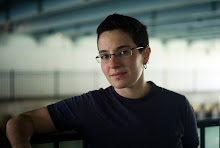
- Start with protagonist. If you start with a main character rather than a plot, it will help you create a character-driven novel. Write or brainstorm a brief character sketch.
- Create antagonist. If you have one villain, write or brainstorm a brief character sketch. If there are multiple antagonists, write or brainstorm multiple character sketches.
- Add stakes. Answer the following questions on a sheet of paper: What does your protagonist want? What happens if s/he doesn't get it? What does your villain want? What happens if s/he doesn't get it? What do they each have to lose?
- Create concept. Write a one or two line prompt that starts the book. This will give you a place to begin. What's the first thing that happens in the book? What gets the ball rolling? Example #1: A father comes home to find his entire family has been kidnapped. Example #2 A P.I. is framed for the murder he was hired to investigate. These are very simple and will become more complex as you write.
- Create setting. Where is this all taking place? Is the setting real or imagined? Take time to think about the setting. This will give your book authenticity and you may discover some aspects of the place that you can use in your story.
- Mix steps 1-5 and create outline. Now that you have your protagonist, antagonist, concept and setting, you're ready to start shaping your book. If you don't have a good handle on those things yet, try writing a few scenes, just to get a handle on the voice of your story. Some people work better at outlining first, others write their way into it. But having an idea of where your going will create a tight plot without a lot of "throat clearing".
- Write, write, write!
- Raise stakes throughout. In a good book, characters change. Therefore, their motivations will too. With each turning point, you must raise the stakes for your characters. This will heighten tension and keep readers intrigued.
- Add a dash of tension on every page. Elmore Leonard said it best, "I don't write the parts that people skip." It doesn't have to be, edge-of-your-seat-character-could-die-at-any-moment tension. That would be too much. But adding some sort of tension, whether it be internal or external, is necessary to keep the book moving forward.
- Sprinkle clues throughout. Give readers just enough to keep them guessing, but not enough that they get it right.
- Turn up the heat. As you near the end of your book, the pacing should pick up a bit. Don't give readers a chance to put the book down.
- Create a strong finish. A good ending is one that readers don't predict beforehand, but, in hindsight, realize the answer has been in front of them the whole time. Avoid cliches, don't pull a rabbit out of the hat, but don't go for the obvious either. When you're finished, if it's too predictable or too out there, go back to step 10.
- Set aside and let cool.
- Reread and revise until perfect. Don't be naive and think that your first draft is perfect. After you've set the book aside for a while, you'll hopefully come back with enough perspective to give the book any necessary tweaking.
- Test. Your book, like new recipes, should be tried out on the people closest to you before sending it out. Let trusted friends and family read the book and give you feedback before querying agents. They'll be able to see many things that your eyes missed.
Wednesday, January 28, 2009
Recipe for Good Crime Fiction


Tuesday, January 20, 2009
Get the Facts
A fiction writer, by definition, makes things up. The stories we tell stem from our imagination. I know very few crime writers who are also detectives solving murder cases or romance writers that are seduced by a hunky, but unattainable, man on a daily basis. Our stories are fantasies, ideas, entertainment.
But even though our stories are fictional, even though we can get away with making up characters and weaving high-concept plots, so much of the book needs to be factual. Mysteries must stay true to police procedures, weapons and forensic science. Thrillers must give accurate accounts of the FBI and CIA, stay true to the laws of physics (can't have the hero flying through the air to save the day), and while the plot is made up, it must be feasible enough to feel like something that could actually happen. Fantasies create their own worlds and laws, but must stay true to the rules they create. While yes, we're making things up, I'd say 60% of the book is based on truth.
Think back to your favorite books. What was it that you enjoyed so much? Was it the characters and their authentic dialogue? The setting and how true it rang? The history or science within the pages and how much you learned from it?
A few of my favorites include: PORTNOY'S COMPLAINT, LAST EXIT TO BROOKLYN, MYSTIC RIVER and anything by Chuck Palahniuk. Would PORTNOY have been as interesting if the dialogue wasn't so authentic? If it didn't hit the nail on the head in portraying a Jewish family of that time period? Would LAST EXIT have been as compelling if the place wasn't so wonderfully portrayed, if Selby didn't make you feel the grit and grime of Brooklyn's streets? Same goes for MYSTIC RIVER and Lehane's portrayal of south Boston. But what I found even more compelling about that book was Lehane's ability to stay so true to human emotion and motivation. Chuck Palaniuk bases most of his books on weird facts and tidbits he gathers in his daily life. While the story and characters are fascinating, it's those little facts, those things that you would never in a million years think of, that make his work memorable.
Conversely, inaccuracy or lack of authority, can easily break a book. So many books are written about Chicago and when they're wrong, I immediately put the book down. Same goes for inaccurate police procedurals or weapons information. The worst, however, is when the dialogue isn't believable, when the characters in the book are people that would never exist, when they act unlike any person you've ever met. Even a vampire or a werewolf should have believable personality traits and real motivations.
So how to you ensure accuracy in your writing? One word: research. Authenticity is not something that comes from simply surfing the web. It requires authors to get away from the computer. This could include:
But even though our stories are fictional, even though we can get away with making up characters and weaving high-concept plots, so much of the book needs to be factual. Mysteries must stay true to police procedures, weapons and forensic science. Thrillers must give accurate accounts of the FBI and CIA, stay true to the laws of physics (can't have the hero flying through the air to save the day), and while the plot is made up, it must be feasible enough to feel like something that could actually happen. Fantasies create their own worlds and laws, but must stay true to the rules they create. While yes, we're making things up, I'd say 60% of the book is based on truth.
Think back to your favorite books. What was it that you enjoyed so much? Was it the characters and their authentic dialogue? The setting and how true it rang? The history or science within the pages and how much you learned from it?
A few of my favorites include: PORTNOY'S COMPLAINT, LAST EXIT TO BROOKLYN, MYSTIC RIVER and anything by Chuck Palahniuk. Would PORTNOY have been as interesting if the dialogue wasn't so authentic? If it didn't hit the nail on the head in portraying a Jewish family of that time period? Would LAST EXIT have been as compelling if the place wasn't so wonderfully portrayed, if Selby didn't make you feel the grit and grime of Brooklyn's streets? Same goes for MYSTIC RIVER and Lehane's portrayal of south Boston. But what I found even more compelling about that book was Lehane's ability to stay so true to human emotion and motivation. Chuck Palaniuk bases most of his books on weird facts and tidbits he gathers in his daily life. While the story and characters are fascinating, it's those little facts, those things that you would never in a million years think of, that make his work memorable.
Conversely, inaccuracy or lack of authority, can easily break a book. So many books are written about Chicago and when they're wrong, I immediately put the book down. Same goes for inaccurate police procedurals or weapons information. The worst, however, is when the dialogue isn't believable, when the characters in the book are people that would never exist, when they act unlike any person you've ever met. Even a vampire or a werewolf should have believable personality traits and real motivations.
So how to you ensure accuracy in your writing? One word: research. Authenticity is not something that comes from simply surfing the web. It requires authors to get away from the computer. This could include:
- Police ride-along (and then going out with them to the bar afterwards to nail their dialogue)
- Walking or driving around the places in your story. Getting a sense for the people who live there, the businesses in the area, the terrain, the weather, etc.
- Sitting in a cafe or restaurant and writing down overheard conversations. It's a great exercise to practice writing dialogue.
- If your main character has an occupation that you've never had yourself, talk to someone in that industry. By, talking with a journalist or P.I. you not only learn the details of their job, but you also learn about the type of person they are: what clothes they wear, how they work, their personality, etc.
- Going to a gun range or taking a martial arts class.
There's the common mantra of write what you know, but personally, what I know isn't all that interesting. I find it a lot more fun to write about bad guys. But those bad guys must be authentic, and achieving that requires a bit of research. So although we make stuff up, even though our stories come from our imaginations and our creativity, it's actually the facts that set the good books apart from the bad.
Thursday, January 08, 2009
Adapt or Die
As the layoffs continue, the sales decline, and the number of acquisitions grinds to a screeching halt, it's impossible not to think about the future. As a newbie novelist, I am constantly thinking, "Well, if it was hard to break into the industry before, it's going to be virtually impossible now." As newspapers go under and book sections are cut, my job as a freelancer is also put in jeopardy. So how can we survive in such a struggling industry? We adapt.
I think now, more than ever, online articles and reviews are key to staying in the game. Journalism is a lot like novel writing: go too long without publishing something and you are soon forgotten. Guest blogging and publishing reviews or interviews online is an easy way to keep your name in the game. Since their overhead is minimal, online publications aren't struggling the way newspapers are and they have far more space for freelance submissions.
From talking to people and reading industry publications, it seems that the movie business hasn't taken as much of a hit as print, however, these two industries often work hand in hand. How many novels were completely forgotten until their adaptation was released on the big screen? I do believe that authors (unless they're horrible at writing dialogue) can write decent screen plays, so why not take a stab at adapting one of your novels or short stories? Sure, it's great to get a book optioned, but unless the movie gets made, it won't translate into sales. I'd say in this climate, it's a lot easier to sell a screenplay than it is to sell a novel, so why not try your hand at something new?
One thing that I still would stay away from is self publishing or e-publishing. While technology like the Kindle and Sony Reader will eventually give way to a burst of e-books, the market still isn't there. I'd say your much better off holding on to that novel until the market improves than going down the self-publishing path.
In order to survive in a changing industry, one must adapt. Writing has always been a tough industry to break in to, but now, it's tougher than ever. Innovation and creativity are necessary to getting a foot in the door, even if it's a different door than you originally intended. Opening yourself up to different genres or different mediums will make it easier to break in and give you valuable experience so you, hopefully, will stay in.
I think now, more than ever, online articles and reviews are key to staying in the game. Journalism is a lot like novel writing: go too long without publishing something and you are soon forgotten. Guest blogging and publishing reviews or interviews online is an easy way to keep your name in the game. Since their overhead is minimal, online publications aren't struggling the way newspapers are and they have far more space for freelance submissions.
From talking to people and reading industry publications, it seems that the movie business hasn't taken as much of a hit as print, however, these two industries often work hand in hand. How many novels were completely forgotten until their adaptation was released on the big screen? I do believe that authors (unless they're horrible at writing dialogue) can write decent screen plays, so why not take a stab at adapting one of your novels or short stories? Sure, it's great to get a book optioned, but unless the movie gets made, it won't translate into sales. I'd say in this climate, it's a lot easier to sell a screenplay than it is to sell a novel, so why not try your hand at something new?
One thing that I still would stay away from is self publishing or e-publishing. While technology like the Kindle and Sony Reader will eventually give way to a burst of e-books, the market still isn't there. I'd say your much better off holding on to that novel until the market improves than going down the self-publishing path.
In order to survive in a changing industry, one must adapt. Writing has always been a tough industry to break in to, but now, it's tougher than ever. Innovation and creativity are necessary to getting a foot in the door, even if it's a different door than you originally intended. Opening yourself up to different genres or different mediums will make it easier to break in and give you valuable experience so you, hopefully, will stay in.
Tuesday, December 30, 2008
Falling Short in '08
This would usually be the time that I do a round-up for 2008. I scan my shelves, my notes, my reviews and compile a list of best books I read this year. I usually have trouble deciding which to include because there are so many I loved. This year, I didn't have that problem. I actually found it difficult to find a book that really blew my hair back.
There were many, like TRIGGER CITY and GOOD PEOPLE, that were well written, gripping, all of the things I ask for in a good book. But usually there is a few, one at least, that was amazing, one that I couldn't put down, one that reaffirmed my love of fiction, one that was impossible to forget even a year later.
Book critic David Montgomery addressed this a few weeks ago, but what I've been thinking about is, why? What was it about 2008 that made it a weaker year for fiction? Have publishing standards changed? Have audience standards changed? Or was 2008 not weaker? Is it simply taking more to impress the critics?
After spending all Chanukah thinking about this, I've come to a few conclusions:
There were many, like TRIGGER CITY and GOOD PEOPLE, that were well written, gripping, all of the things I ask for in a good book. But usually there is a few, one at least, that was amazing, one that I couldn't put down, one that reaffirmed my love of fiction, one that was impossible to forget even a year later.
Book critic David Montgomery addressed this a few weeks ago, but what I've been thinking about is, why? What was it about 2008 that made it a weaker year for fiction? Have publishing standards changed? Have audience standards changed? Or was 2008 not weaker? Is it simply taking more to impress the critics?
After spending all Chanukah thinking about this, I've come to a few conclusions:
- The more you read, the more it takes to be impressed. After reading hundreds of crime fiction novels, it's hard to stumble upon a truly new idea. A plot or character that would have impressed me years ago, may be old news today. If the book isn't fantastic, if it doesn't have a new writing style or plot idea, it tends to blend in and is more easily forgotten.
- As we know, the publishing industry is in trouble. People aren't buying as many books, they're not taking risks on debut authors, etc. Because publishers need to make money, they often publish books that are similar to previous bestsellers. After DA VINCI CODE, how many foreign thrillers centered around legends and artifacts were released? How many celebrity moms have parenting books on the shelves? Publishing a new concept or an author with a new writing style is risky, and in this climate, publishers aren't about taking risks.
- I think this has also been a particularly bad year for debut authors, which attributes to a weak 2008. Debut novels are fresh, new, and often very well crafted. A debut novel is the one the author spent years working on. No contract, no deadlines, writing until it was the best it can possibly be. While most authors get better with practice, I can usually see the labor that went into that first one. Finding a new author is a memorable moment, and there weren't many of those this year.
- Looking back, I also have to say this wasn't a particularly great year for movies either. The artist in me thinks it's both lack of inspiration and innovation on the part of the story teller. One of my favorite books is LAST EXIT TO BROOKLYN by Hubert Selby Jr. and one of my favorite movies is DONNIE DARKO. What do these two have in common? First, they both tell a story in a different way. Selby plays with sentence structure and punctuation to make the story sound the way he wants. DARKO is a mix of fantasy and reality, is told forwards and backwards, to get the screenwriter's message across. Both are emotional, both have memorable characters, and both are different than anything I've ever read or seen. I don't think we had any of that his year. I think everything I read was told in standard, narrative form. There were no characters that were different or surprising. There was an overall lack of risk taking, which makes fiction fall short.
I hope that this changes in 2009 as I'd hate to lose my passion for reading. While I'm more motivated than ever to write an innovative, gripping novel, it's hard when there is a lack inspiration lining my shelves. With the publishing world deteriorating the way it is, part of me thinks that it will only get worse, even though I try to stay positive and hope for the best.
So as not to end on such a pessimistic note, here are a few books that I really enjoyed and that are still memorable all these months later:
Friday, December 12, 2008
Ending it All
A great ending is extremely difficult to write. Building the tension slowly, tying up loose ends, all without being cliche is a very daunting task. I won't say that the ending is the most important part of the book, but a bad ending can definitely change my opinion of the book.
I drafted the first draft of STREET WALK in a month (courtesy of NaNoWriMo). I rewrote the first 250 pages in about four months. The ending, the build-up to the grand finale, has taken me close to two. And while I hope to complete the ending in the next couple of weeks, the slowness of the process has taught me a few things. Most of them I knew in theory, but they didn't sink in until I actually applied it:
I drafted the first draft of STREET WALK in a month (courtesy of NaNoWriMo). I rewrote the first 250 pages in about four months. The ending, the build-up to the grand finale, has taken me close to two. And while I hope to complete the ending in the next couple of weeks, the slowness of the process has taught me a few things. Most of them I knew in theory, but they didn't sink in until I actually applied it:
- The last third of a book is the build-up to the ending. I used to think it was just the last 50 pages, but it actually begins a lot sooner. While reading a book, you usually don't realize it, but a good author will begin dropping hints and setting up obstacles for the grand finale in the last 100 pages. You only realize those hints in retrospect.
- Build the tension slowly. I hate reading rushed endings, so I'm trying not to write one. In crime fiction, most climaxes are filled with action, something that's easily rushed through. If you slow down the action, heighten the protagonist's personal goals as well as the external, the writing will be more gripping. As a reader, I never remember the jam-packed action scenes from books. I remember plot twists and the moment when the protagonist is faced with either their greatest fear or the possibility that they will not reach their goal. Those moments aren't done in a page.
- Don't cop out. Never take the easy way out, not for you as a writer or for your protagonist. Don't plant a gun that your protagonist can "fortunately" grab in the nick of time. Don't have the cops storm in just before your protagonist is killed by the villain. Be creative. You got your protagonist into this mess, it's your job to get them out of it.
- Be unexpected, but not too unexpected. Ideally, you want to strike a balance between a predictable ending and one that is so out there that it is unbelievable and would never happen. In a mystery, when the villain is unmasked (so to speak), you don't want readers to say, "Oh, I knew that the whole time." You also don't want the villain to be a minor character that was barely in the book or someone that makes utterly no sense. You want readers to feel like the killer was under their nose the whole time. They just didn't see it. Same goes for thrillers. You want your protagonist to save the day, but not make it too easy on them. Throw some unexpected obstacles their way and force them to rise to the occasion.
- Stop and brainstorm. I used to be obsessed with reaching a word count or a page count for the day, so much that I'd often not give myself time to think. I'd just plow along and make things up on the fly. But good ideas aren't instantaneous. Slowing down and thinking of a few different possibilities for an ending can be helpful and aid in avoiding major revisions later. It's also great to bounce ideas off fellow readers and writers. Give them a few different scenarios for endings and see which ones they respond to best.
- Trust your gut. We all have an inner censor, and more often than not, it doesn't go off for no reason. If it feels cliche, it probably is. If it feels too rushed, you probably need to slow down. If you're super self-deprecating and your own worst critic then maybe you can ignore your inner censor. But most of us are good at knowing the difference between good writing and something that should be thrown in the trash. If you don't trust your gut, find someone you can.
Tuesday, December 09, 2008
Blagojevich Arrested
Anywhere else, this would be shocking. Here, it's just another corruption scandal in Illinois government. Ok, it may be a big corruption scandal. All I have to say is, finally!
Friday, December 05, 2008
Demand the Supply
If you're not concerned with the state of the publishing industry, you're not paying attention. With hundreds of layoffs, acquisition freezes, newspapers going under, it's getting harder and harder not to panic. As writers, we depend on these larger companies, and if they're not taking on new projects, then editors won't be the only ones out of a job.
So, as readers and writers, what can we do? Since there's no supply without the demand, we can show publishers and booksellers that people still want to buy books, good books. As Jason Pinter points out, most of the recent deals are made with celebrity authors such as Sarah Silverman, Mike Piazza, and (groan) Dustin "Screech" Diamond. The reason? Name recognition. Easy to market and almost guaranteed to sell.
By buying books written by debut authors or those published by small/independent presses, we accomplish a few things:
So, as readers and writers, what can we do? Since there's no supply without the demand, we can show publishers and booksellers that people still want to buy books, good books. As Jason Pinter points out, most of the recent deals are made with celebrity authors such as Sarah Silverman, Mike Piazza, and (groan) Dustin "Screech" Diamond. The reason? Name recognition. Easy to market and almost guaranteed to sell.
By buying books written by debut authors or those published by small/independent presses, we accomplish a few things:
- We support debut authors and small/independent presses.
- We show booksellers that there is a demand for debut authors and books published by small/independent presses, which causes them to order more of these types of books.
- Because the booksellers order more books by debut authors, crime fiction, etc., publishers are more likely to make these types of acquisitions in the near future.
It's a pretty simple concept. Demonstrate a demand and sellers will supply. So how do we know, as readers, what to demand? That's up to the author. And with all the cutbacks, don't expect a big marketing budget. Check out this post if you need some suggestions on how to market yourself.
Be on the lookout for the small presses, debut authors, and anything local. Show publishers that we don't want fluff written by celebrities. While you're at it, get a newspaper or local magazine subscription. Demonstrate the demand for quality publications and hopefully it won't be too long before the publishing industry is back on track.
For more frequent and extensive updates on the publishing industry, check out GalleyCat, Publisher's Marketplace, or just follow Sarah Weinman on Twitter. Tess Gerritsen also has some interesting observations over at her blog.
Sunday, November 30, 2008
Friday's Forgotten Books
A little late to post this, but check out my contribution to Patti Abbott's Friday's Forgotten Books.
Wednesday, November 26, 2008
Holiday Shopping Guide: Recession Edition
With more government bailouts, more people losing their jobs and homes and more panic spreading across the nation, it's pretty hard to think about the approaching holidays. Most years, we'd be gearing up for the after-Thanksgiving sales, strategizing how to hit as many stores as possible for the early bird deals. Now, people are scaling back, not buying the extravagant gifts they did last year.
But there is one thoughtful gift that won't break the bank: a book. Giving books this holiday doesn't only support authors, the publishing houses and your local booksellers. A book is the perfect way to show people you put thought into their present and reading is the perfect activity for holiday traveling or being holed up on snowy winter days. And so I offer my recommendations for every person on your holiday shopping list:
Gift For: Your father who doesn't read anything except the New York Times, Wall Street Journal, and the occasional presidential biography.
But there is one thoughtful gift that won't break the bank: a book. Giving books this holiday doesn't only support authors, the publishing houses and your local booksellers. A book is the perfect way to show people you put thought into their present and reading is the perfect activity for holiday traveling or being holed up on snowy winter days. And so I offer my recommendations for every person on your holiday shopping list:
Gift For: Your father who doesn't read anything except the New York Times, Wall Street Journal, and the occasional presidential biography.
- THE NINE: Inside the Secret World of the Supreme Court
- WARLORD: A Life of Winston Churchill at War
- JOHN ADAMS by David McCullough**
- THE ACCENT OF MONEY: A Financial History of the World
Gift For: Your mother who always reads the National Book Award and Pulitzer Prize winners and who has never missed an Oprah Pick:
- SHADOW COUNTRY by Peter Matthiessen
- THE BRIEF AND WONDROUS LIFE OF OSCAR WAO by Junot Diaz**
- THE STORY OF EDWARD SAWTELLE: A Novel by David Wroblewski
- THE WHITE TIGER: A Novel by Aravind Adiga
Gift For: Your school age sister, niece or cousin who's going through a goth phase:
- TWILIGHT by Stephanie Meyer
- The Sookie Stackhouse boxed set by Charlaine Harris**
- THE LAST VAMPIRE by Patricia Rosemoor and Marc Paoletti**
Gift For: Your high school brother, nephew, or cousin who thinks reading is stupid:
- HAIRSTYLES OF THE DAMNED by Joe Meno**
- PLEASE KILL ME: The Uncensored Oral History of Punk by Legs McNeil and Gillian McCain**
- BRINGING DOWN THE HOUSE by Ben Mezrich**
Gift For: Your Grandpa who loves watching Law and Order and CSI:
Gift For: Your uncle who does a lot of business traveling and enjoys "quick reads":
Gift For: Your friend from Art School who's into "weird shit":
- SURVIVOR by Chuck Palahniuk**
- REQUIEM FOR A DREAM by Hubert Selby Jr.**
- NAKED LUNCH by William S. Burroughs**
Note: Because a lot of these books aren't my personal preference, many of them I haven't read. The books marked with a ** are those that I have read and can truly recommend. The others are just suggestions based on the opinions of others.
Tuesday, November 18, 2008
More Than a Writer
I recently finished a non-fiction book proposal, something that is completely different than what I usually write. It was definitely an eye-opening, learning experience and it made me realize how being a writer isn't just about putting words on a page or telling a story. All writers are, or at least should be, the following:
Problem Solvers. If you're writing fiction, your job is to get your characters into jams and then get them out of it. Crichton created Jurassic Park, but then he had to figure out a way to get his main characters out alive. If you're writing non-fiction, you're usually addressing a problem in today's society and providing an answer. Textbooks provide answers to research questions, Self-Help books solve people's personal problems, etc. If there is no problem to solve, there generally isn't a book to write.
Sales People. Writers don't just have to sell their book to readers, they also have to sell it to agents, editors, and reviewers. And once your published, your publisher is going to expect you to sell, sell, sell, market, market, market. You may be a wonderful storyteller, but if you can't sell your story, your story won't get sold.
Small Business Owners. Whether you do it full time or part time, being a writer is owning a small business. You have to cover your own health insurance, pay extra taxes, and move with the ups and downs of good months and bad months. You have to think about sales, about budget, advertising, about bringing in new business and maintaining the business you have. You get to work in your pajamas and make shit up for a living, but maintaining the financial/administrative side is what separates the writers from the dilettantes.
Translators. This is especially true for freelancers, but also applies to novelists. As writers, it is our job to translate an idea to the page and make it understandable. As a freelancer, you may get a press packet that you have to boil down into 200 words or less. A reviewer has to convey the essence of a 300 page book in about 300 words. A novelist has to mold and shape an idea into something that is easy to follow and understand. Writers translate ideas and information to make them more accessible.
Politicians. I may be stretching it with this one, but hear me out. In publishing, whether it be magazines, newspapers or novels, there are plenty of politics, plenty of games that have to be played. You have to schmooze editors, other authors, talk to people in a way that gets you what you want. You have to present yourself in a likeable, professional way, be well spoken and thoughtful, and of course, have a platform. You should know how to shake hands and work a room. Hopefully, you're slightly more honest than the DC bigwigs, but the better politician you are, the more successful you'll be.
Problem Solvers. If you're writing fiction, your job is to get your characters into jams and then get them out of it. Crichton created Jurassic Park, but then he had to figure out a way to get his main characters out alive. If you're writing non-fiction, you're usually addressing a problem in today's society and providing an answer. Textbooks provide answers to research questions, Self-Help books solve people's personal problems, etc. If there is no problem to solve, there generally isn't a book to write.
Sales People. Writers don't just have to sell their book to readers, they also have to sell it to agents, editors, and reviewers. And once your published, your publisher is going to expect you to sell, sell, sell, market, market, market. You may be a wonderful storyteller, but if you can't sell your story, your story won't get sold.
Small Business Owners. Whether you do it full time or part time, being a writer is owning a small business. You have to cover your own health insurance, pay extra taxes, and move with the ups and downs of good months and bad months. You have to think about sales, about budget, advertising, about bringing in new business and maintaining the business you have. You get to work in your pajamas and make shit up for a living, but maintaining the financial/administrative side is what separates the writers from the dilettantes.
Translators. This is especially true for freelancers, but also applies to novelists. As writers, it is our job to translate an idea to the page and make it understandable. As a freelancer, you may get a press packet that you have to boil down into 200 words or less. A reviewer has to convey the essence of a 300 page book in about 300 words. A novelist has to mold and shape an idea into something that is easy to follow and understand. Writers translate ideas and information to make them more accessible.
Politicians. I may be stretching it with this one, but hear me out. In publishing, whether it be magazines, newspapers or novels, there are plenty of politics, plenty of games that have to be played. You have to schmooze editors, other authors, talk to people in a way that gets you what you want. You have to present yourself in a likeable, professional way, be well spoken and thoughtful, and of course, have a platform. You should know how to shake hands and work a room. Hopefully, you're slightly more honest than the DC bigwigs, but the better politician you are, the more successful you'll be.
Tuesday, November 11, 2008
Panic Over
There are many stressful experiences for writers: a looming book deadline, negotiating a contract, reading the first batch of reviews. But I am certain there is one stresser that outbeats all of them, one that I had the pleasure of experiencing this weekend: a computer virus.
If you're Facebook friends with me and you got that suspicious message from me on Friday, I'm sorry, and extra forgiveness if you opened it thinking, "Dana wouldn't send me anything suspicious" and got the virus yourself. Once your infected, the blasted thing sends messages to all your friends, from you, telling you to click on a link. I got a message from my friend, I clicked, and thus began the panicked, stressed out, ulcer-and-gray-hair-inducing weekend.
Last week I read a post about the importance of backing up. I thought it was a good post and I was proud of myself that I do most of those things. I save everything to a USB and e-mail myself the important documents once a week. But like I said, this happened on Friday, pre-back up.
Thankfully, I caught it in time and thanks to my trusty anti-virus, anti-spyware, the helpful people at Microsoft and a half bottle of tequila, I'm back online and all my files seem to be in tact. But I could have just as easily lost a lot of work. A whole week's worth of writing, gone. So please, go to Joe's blog, read what he has to say about all the ways you can avoid losing your writing. Don't think you're immune. I have an anti-virus, I have a firewall, I don't open strange e-mails from people I don't know, and yet, I still managed to get a virus. I guess I could always go Mac...
If you're Facebook friends with me and you got that suspicious message from me on Friday, I'm sorry, and extra forgiveness if you opened it thinking, "Dana wouldn't send me anything suspicious" and got the virus yourself. Once your infected, the blasted thing sends messages to all your friends, from you, telling you to click on a link. I got a message from my friend, I clicked, and thus began the panicked, stressed out, ulcer-and-gray-hair-inducing weekend.
Last week I read a post about the importance of backing up. I thought it was a good post and I was proud of myself that I do most of those things. I save everything to a USB and e-mail myself the important documents once a week. But like I said, this happened on Friday, pre-back up.
Thankfully, I caught it in time and thanks to my trusty anti-virus, anti-spyware, the helpful people at Microsoft and a half bottle of tequila, I'm back online and all my files seem to be in tact. But I could have just as easily lost a lot of work. A whole week's worth of writing, gone. So please, go to Joe's blog, read what he has to say about all the ways you can avoid losing your writing. Don't think you're immune. I have an anti-virus, I have a firewall, I don't open strange e-mails from people I don't know, and yet, I still managed to get a virus. I guess I could always go Mac...
Wednesday, November 05, 2008
R.I.P. Michael Crichton
This just in via Sarah Weinman: Bestselling author, Michael Crichton, has died at the age of 66 after a battle with cancer. Very unexpected and very sad.
Thursday, October 30, 2008
Accept the ADD
I'm a multi-tasker. Ok, I'm borderline ADD. As I write this I'm also doing laundry, working on a book proposal, and ordering a new swim suit from SwimOutlet.com. To sit still and focus on a single project is too much pressure. If I get stuck while working on the novel, I can wash the dishes while I think, but if I simply sit and try to get myself unstuck, I'll keep drawing a blank.
The ADD translates into my writing as well. Currently, I'm reworking one novel, researching and plotting another, writing a nonfiction book proposal, and writing two short stories. This is on top of whatever book review or magazine article I have due that week. The good part of this is I always feel like I'm accomplishing something. Seldom does a day go by when I don't work on some form of writing. But the question is, am I spreading myself too thin? Does the work suffer or does it just take longer to complete?
I know authors who write 2-3 books a year on top of whatever short stories they submit to anthologies. Others, write just one book a year. Literary authors (and Dennis Lehane) can take up to five years working on a single project. Is there a difference in the quality of the work? Sometimes. I don't think Nora Roberts is known for her brilliant prose and innovative ideas. But who sells more? Her or a Pulitzer Prize winner?
I read a lot of mid-list genre fiction writers who, in my mind, could stand to take a little more time with their work. A lot of writers are talented, but rush the process which leads to a mediocre novel. But there's a pressure - from publishers, agents, and fans - to produce. The majority of writers who earn a living solely from writing books are genre writers producing a book a year. Like any other job, the more you work the more you make.
If you're one of those people who can write two, brilliant books a year without breaking a sweat, well I hate you, but I still tip my hat. Most of us need time to produce quality work. Looking back on the first book I wrote, I see how most of it's problems could have been avoided if I had simply slowed down and let it marinate. The question is, if I had let it marinate and used that time to write a short story, would I have ended up with both a quality novel and a quality short story?
Most of this boils down to process. Some people write fast, others don't. Some need to busy themselves in order to overcome writer's block while others need to sit in the chair and stare at the computer. Some can take on numerous projects while others need to be fully absorbed in the piece they're working on.
Often, I need to remind myself that if I start too much, I won't finish anything. But sometimes, the multi-tasking is more effective. I'm the type of person who can easily shift their focus without letting the work suffer. In fact, I'd argue that the work would suffer more if I sat in the chair and trudged through the novel because it would come out sounding forced.
But if it's a question between quality and quantity, which is more important? Is it better to produce lots of mediocrity or a few high-quality pieces?
The ADD translates into my writing as well. Currently, I'm reworking one novel, researching and plotting another, writing a nonfiction book proposal, and writing two short stories. This is on top of whatever book review or magazine article I have due that week. The good part of this is I always feel like I'm accomplishing something. Seldom does a day go by when I don't work on some form of writing. But the question is, am I spreading myself too thin? Does the work suffer or does it just take longer to complete?
I know authors who write 2-3 books a year on top of whatever short stories they submit to anthologies. Others, write just one book a year. Literary authors (and Dennis Lehane) can take up to five years working on a single project. Is there a difference in the quality of the work? Sometimes. I don't think Nora Roberts is known for her brilliant prose and innovative ideas. But who sells more? Her or a Pulitzer Prize winner?
I read a lot of mid-list genre fiction writers who, in my mind, could stand to take a little more time with their work. A lot of writers are talented, but rush the process which leads to a mediocre novel. But there's a pressure - from publishers, agents, and fans - to produce. The majority of writers who earn a living solely from writing books are genre writers producing a book a year. Like any other job, the more you work the more you make.
If you're one of those people who can write two, brilliant books a year without breaking a sweat, well I hate you, but I still tip my hat. Most of us need time to produce quality work. Looking back on the first book I wrote, I see how most of it's problems could have been avoided if I had simply slowed down and let it marinate. The question is, if I had let it marinate and used that time to write a short story, would I have ended up with both a quality novel and a quality short story?
Most of this boils down to process. Some people write fast, others don't. Some need to busy themselves in order to overcome writer's block while others need to sit in the chair and stare at the computer. Some can take on numerous projects while others need to be fully absorbed in the piece they're working on.
Often, I need to remind myself that if I start too much, I won't finish anything. But sometimes, the multi-tasking is more effective. I'm the type of person who can easily shift their focus without letting the work suffer. In fact, I'd argue that the work would suffer more if I sat in the chair and trudged through the novel because it would come out sounding forced.
But if it's a question between quality and quantity, which is more important? Is it better to produce lots of mediocrity or a few high-quality pieces?
Monday, October 20, 2008
Out with the old?
Yesterday, Nicole and I went to see our friend in a production of Pirates of Penzance. The singing was great, the acting was great, but I felt like the play itself was so slow paced. I laughed a few times, I know the play isn't as much about the story as it is about the comedy, but so often I felt like screaming, "Get on with it already!"
At intermission, I looked through the program and saw that the play was first performed in 1879, long before "talking pictures" and television. The expected pace for telling a story was different. Now we want movement, more forward momentum at a quicker speed. We have a low tolerance for meandering.
The question is, does this translate into books? I love Edgar Allen Poe and Arthur Conan Doyle, but they certainly told a story at a different pace. I can't say that any of their books could be described as, "gut-wrenching suspense" or "edge of your seat reads". Poe is one of my favorite authors and although is work is creepy and brilliant, I wouldn't call it fast paced.
I talked about this in a post last month, but I find it interesting that the issue of pace continues to come up. Is it an issue of a generation? Have we become too accustomed to instant gratification that the books and plays of the 19th century are too dated to enjoy? I remember taking 19th century literature and hating it, partially because there was too much Jane Austen, but mostly because the books couldn't keep my attention. Was it simply a style of the times? Is our style much better?
I have yet to draw a conclusion on any of this, but I do think it's sad that it has become difficult to appreciate the classics because of their long-winded prose and meandering storylines. Nowadays, more emphasis is placed on pacing and plot than it is on style and prose. But is this a good thing? Or could we stand to learn something from our 19th century ancestors?
At intermission, I looked through the program and saw that the play was first performed in 1879, long before "talking pictures" and television. The expected pace for telling a story was different. Now we want movement, more forward momentum at a quicker speed. We have a low tolerance for meandering.
The question is, does this translate into books? I love Edgar Allen Poe and Arthur Conan Doyle, but they certainly told a story at a different pace. I can't say that any of their books could be described as, "gut-wrenching suspense" or "edge of your seat reads". Poe is one of my favorite authors and although is work is creepy and brilliant, I wouldn't call it fast paced.
I talked about this in a post last month, but I find it interesting that the issue of pace continues to come up. Is it an issue of a generation? Have we become too accustomed to instant gratification that the books and plays of the 19th century are too dated to enjoy? I remember taking 19th century literature and hating it, partially because there was too much Jane Austen, but mostly because the books couldn't keep my attention. Was it simply a style of the times? Is our style much better?
I have yet to draw a conclusion on any of this, but I do think it's sad that it has become difficult to appreciate the classics because of their long-winded prose and meandering storylines. Nowadays, more emphasis is placed on pacing and plot than it is on style and prose. But is this a good thing? Or could we stand to learn something from our 19th century ancestors?
Monday, October 13, 2008
Back from Baltimore
I'm back and almost fully recovered from the fun-filled weekend. This was easily one of the best-run Bouchercons ever, thanks to Judy Bobalik and Ruth Jordon. Everything was organized, easy to find, and the panels were interesting and well-attended. Some of the highlights:
- Although I missed the awards brunch, congratulations to all the winners!
- Meeting debut novelist Andrew Grant. He's a great guy and, I suspect, a hell of a writer.
- The conversation with Mark Billingham and John Connolly was highly entertaining. If you missed it, it's available on the Rap Sheet.
- Hanging out with Nathan Singer and the Bleakhouse Books crew. Not only do they produce quality books, but there tons of fun to hang with.
- As always, great to see Sean Chercover, Marcus Sakey, Jamie Freveletti, Tasha Alexander, John and Ruth Jordon, Judy Bobalik, Lee Child, Rebecca Drake, Laura Caldwell, and Sarah Weinman.
Hope everyone who attended is recovering and those who missed it will consider attending Bouchercon 2009.
Wednesday, October 08, 2008
This just in...
Pick up Time Out Chicago tomorrow to read my review of Sean Chercover's TRIGGER CITY. The book officially launches at Bouchercon, so the timing is perfect!
Bouchercon Baltimore
Tomorrow I'll be heading off to Baltimore for Bouchercon, the biggest (and arguably the best) mystery/thriller conference. As always, I look forward to seeing old friends, meeting new ones, and of course, having the opportunity to talk about books all weekend. In a way, these conferences are business. You go to network, make contacts, reconnect. But I've found that the more you can just relax and enjoy yourself, the more contacts you'll inevitably make.
I think of it like this. Most Americans (or at least the ones I know) don't like to get sold to. If they see a canvasser on the street asking for donations, they cross to the other side. They breeze right by the Gap greeter and say, "Just looking!" They avoid Avon ladies, Mary Kay representatives and the dreaded Amway salesman. We don't want to hear the pitch.
Too often, I hear newbie writers attempting to network with agents or editors by "selling" their book. Never works. The editor or agent will tune out or give looks to a buddy to come bail them out of the situation. Like most Americans, they're not interested in being "sold" on the "next big novel".
But there are two lines that never get tuned out: "I'm a big fan of your work. Can I buy you a drink?" Taught to me by a master networker (and drinker), these lines provide the agent/editor/big name author with two things: The opportunity to talk about themselves and to get free booze. Who would say no to that? In turn, you have the opportunity to learn about them, about the industry, and since one drink usually leads to another, you'll have time to solidify that contact.
Eventually, agent/editor/big name author will tire of talking about themselves and ask you a question, such as, "What are you working on?" or "Do you currently have any books out?"
You can then talk to them in casual conversation without it feeling like a business transaction: "Actually, I'm in the process of querying agents now. My book is about (insert elevator pitch here)."
If your pitch is good enough, agent/editor/big name author will ask for more. They may ask who you've queried so far. If they're really interested they may offer to read it or big name author may offer you a reference for his/her agent. But give it time. Remain at ease, enjoy the conversation, and if it leads you to nothing other than a, "Nice meeting you," you still made a contact that may come in handy later.
Another word of advice is not to seem like a leech. There's nothing less appealing than someone only talking to people that could maybe help their career. I was at one conference and a small-time author asked me if I was someone important. Joke was on him because a month later, his book came across my desk and I didn't review it solely because of how he acted. (I know it seems spiteful and childish but ask any reviewer and they'll tell you they'd do the same thing). Everyone, whether it's a fan, a fellow newbie, a big name author, or a reviewer, could be helpful in some way. Seldom do I have a conversation where I don't learn something. Acting like a social climber is a turn off so don't be so quick to dismiss people.
On that note, I offer everyone safe travels to Charm City. I'll be heading straight from Synagogue to the airport ao I'll be arriving a little later on Thursday evening. Be sure to check out my panel, MONEY BACK GUARENTEE on Friday at 3:00pm in International A. I'll be talking to Lee Child, Patti Abbot, Ali Karim, Bill Crider and Rae Helmsworth about the books they love.
Happy networking and I'll see you all there!
I think of it like this. Most Americans (or at least the ones I know) don't like to get sold to. If they see a canvasser on the street asking for donations, they cross to the other side. They breeze right by the Gap greeter and say, "Just looking!" They avoid Avon ladies, Mary Kay representatives and the dreaded Amway salesman. We don't want to hear the pitch.
Too often, I hear newbie writers attempting to network with agents or editors by "selling" their book. Never works. The editor or agent will tune out or give looks to a buddy to come bail them out of the situation. Like most Americans, they're not interested in being "sold" on the "next big novel".
But there are two lines that never get tuned out: "I'm a big fan of your work. Can I buy you a drink?" Taught to me by a master networker (and drinker), these lines provide the agent/editor/big name author with two things: The opportunity to talk about themselves and to get free booze. Who would say no to that? In turn, you have the opportunity to learn about them, about the industry, and since one drink usually leads to another, you'll have time to solidify that contact.
Eventually, agent/editor/big name author will tire of talking about themselves and ask you a question, such as, "What are you working on?" or "Do you currently have any books out?"
You can then talk to them in casual conversation without it feeling like a business transaction: "Actually, I'm in the process of querying agents now. My book is about (insert elevator pitch here)."
If your pitch is good enough, agent/editor/big name author will ask for more. They may ask who you've queried so far. If they're really interested they may offer to read it or big name author may offer you a reference for his/her agent. But give it time. Remain at ease, enjoy the conversation, and if it leads you to nothing other than a, "Nice meeting you," you still made a contact that may come in handy later.
Another word of advice is not to seem like a leech. There's nothing less appealing than someone only talking to people that could maybe help their career. I was at one conference and a small-time author asked me if I was someone important. Joke was on him because a month later, his book came across my desk and I didn't review it solely because of how he acted. (I know it seems spiteful and childish but ask any reviewer and they'll tell you they'd do the same thing). Everyone, whether it's a fan, a fellow newbie, a big name author, or a reviewer, could be helpful in some way. Seldom do I have a conversation where I don't learn something. Acting like a social climber is a turn off so don't be so quick to dismiss people.
On that note, I offer everyone safe travels to Charm City. I'll be heading straight from Synagogue to the airport ao I'll be arriving a little later on Thursday evening. Be sure to check out my panel, MONEY BACK GUARENTEE on Friday at 3:00pm in International A. I'll be talking to Lee Child, Patti Abbot, Ali Karim, Bill Crider and Rae Helmsworth about the books they love.
Happy networking and I'll see you all there!
Wednesday, October 01, 2008
Embrace the Kindle?
After reading Tess Gerritsen's blog post and having a discussion about it at Rosh Hashanah dinner and after having a long debate with my girlfriend about whether or not I need to get rid of some books, I feel inspired to blog about e-books and the Amazon Kindle. I was skeptical of e-books and whether or not they would have a place in the market. Now, I think most of us agree they won't only have a place in the market, but that they will change the publishing world forever. Personally, I have yet to convert to e-books and I do not own a Kindle. I like having actual books. I like holding them, seeing them on my shelf, having them stacked in my office. We use so much technology every day, it's nice to put it to rest a few hours. But for all the cons, most of which are silly and stem from people's fear of chage, there are plenty of pros to E-Books:
They take up less room. When I go on vacation, I have at least four books in my suitcase. We have over five bookshelves in our apartment, double stacked, with an extra row of books on top of each. We have books under the bed and stacked on the desk. A Kindle can hold 200 books. That's one whole, double-stacked bookshelf you can fit into your carry-on. Forget about planning which books to take when you go away for the week; you can take them all.
They're more Eco-friendly. I hadn't really thought about this pro until we visited the Smart Home at the Museum of Science and Industry and they had a Kindle displayed. Think of all the resources that go into producing a book, all of which could be eliminated by switching to digital. Plus, they yield a lot less waste than a library full of books.
They can be more user friendly. Eyes not as strong as they used to be? The Kindle can enlarge the print so you don't need reading glasses. Like to underline passages and scribble things in the margins? The Kindle allows you to do that, plus you can edit your notes later. It even has a built in dictionary and access to Wikipedia. Everything you need is in the palm of your hands.
Books are cheaper. Sure you're shelling out a few hundred dollars for the device itself, but the books you buy for it are no more than $9.99. Tess proclaims in delight that the King James Bible can be downloaded for under two bucks. If you normally buy a lot of books you end up saving money, but if you're an infrequent book buyer, you'd probably just break even.
It's not just for books. You can also have magazine and newspaper subscriptions via kindle. Nowadays, most people read those online, but the Kindle is a lot easier on the eyes.
So with all the pros, what are the cons? Other than being old fashioned, or skeptical of technology or having no other reason other than simply liking real books, the biggest danger of E-books is piracy. Now there are regulations in place that you can't download NYT bestselling books for free, but if the trend catches on, I guarantee someone will develop the technology to pirate e-books. It changed the music industry a great deal, but I fear that since there isn't as much money in publishing, that piracy and free downloading could put many publishers in jeopardy. It's far harder to steal a book out of a store than it is to steal a file online.
I'd love to hear people's opinions on this. Whether or not your a fan of e-books, I think we can all agree that they're growing in popularity and that they are going to change the future of publishing. Are there more pros than cons? Will actual books always have a place in our society? I used to say that newspapers would always be around, even if the majority of people read them online, but recently, I'm not so sure.
Tuesday, September 23, 2008
SIN Reading Tonight!
If you're in the Chicagoland area tonight and feel like having a drink, listening to some readings, and hopefully buying a book, come down to Quimby's bookstore for another SIN Anthology launch party. Joining me are A.C. Frieden, Alverne Ball, Julia Borcherts, and author of RUNNING FROM THE DEVIL Jamie Freveletti, all reading from the anthology. It will definitely be a lot of fun.
Male-Dominated Bookshelf
Last week, M.J. Rose made a comment on her blog that nearly all of Oprah's book selections were written by men. I'm not entirely certain of the criteria for being an Oprah Book Club pick, but it seems surprising to me that a female icon picks so many books written by men for her predominantly female fan base. And, isn't she supposed to be about equality?
But before I passed judgement, I stepped away from the computer to take a look at my own bookshelf. Out of about a hundred hardcovers, only eleven were written by women. I was totally surprised. I know that the mystery/thriller genre is dominated by women, but most of my hardcovers are literary fiction, which I thought to be more balanced. Guess not.
Is it simply because there are more male writers out there or is there a difference in writing styles? When I run through my favorite books - PORTNOY'S COMPLAINT, LAST EXIT TO BROOKLYN, SURVIVOR, MYSTIC RIVER - all of them are written by men. Is it just a coincidence? There isn't really a pattern: a crazy Jewish family with a child addicted to masturbation, a collection of short stories about the drag queens and junkies living in one area of Brooklyn, the sole survivor of a creedish cult about to crash his plane, and how a childhood abduction changes the lives of 3 friends forever. Any pattern I see speaks to my tastes in fiction, not my preference in author gender.
As a female writer myself, I'd hate to think that like so many other industries, writing is so male-dominated. But looking at the books on my shelf and thinking back to my days in fiction classes, I have to admit, men definitely outnumbered the women. There are so many wonderful female authors out there. They're making it to bestseller lists, they're winning awards, and yet the playing field still doesn't seem to be level.
Take a look at your bookshelf and see if you have a similar realization. I believe the only exception would be if you only read romance, a genre where women do dominate. Is it a coincidence, do you prefer male authors, or is it simply because there are more books out there written by men?
But before I passed judgement, I stepped away from the computer to take a look at my own bookshelf. Out of about a hundred hardcovers, only eleven were written by women. I was totally surprised. I know that the mystery/thriller genre is dominated by women, but most of my hardcovers are literary fiction, which I thought to be more balanced. Guess not.
Is it simply because there are more male writers out there or is there a difference in writing styles? When I run through my favorite books - PORTNOY'S COMPLAINT, LAST EXIT TO BROOKLYN, SURVIVOR, MYSTIC RIVER - all of them are written by men. Is it just a coincidence? There isn't really a pattern: a crazy Jewish family with a child addicted to masturbation, a collection of short stories about the drag queens and junkies living in one area of Brooklyn, the sole survivor of a creedish cult about to crash his plane, and how a childhood abduction changes the lives of 3 friends forever. Any pattern I see speaks to my tastes in fiction, not my preference in author gender.
As a female writer myself, I'd hate to think that like so many other industries, writing is so male-dominated. But looking at the books on my shelf and thinking back to my days in fiction classes, I have to admit, men definitely outnumbered the women. There are so many wonderful female authors out there. They're making it to bestseller lists, they're winning awards, and yet the playing field still doesn't seem to be level.
Take a look at your bookshelf and see if you have a similar realization. I believe the only exception would be if you only read romance, a genre where women do dominate. Is it a coincidence, do you prefer male authors, or is it simply because there are more books out there written by men?
Subscribe to:
Posts (Atom)