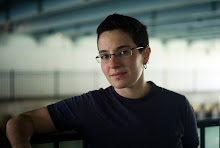
I'm a multi-tasker. Ok, I'm borderline ADD. As I write this I'm also doing laundry, working on a book proposal, and ordering a new swim suit from SwimOutlet.com. To sit still and focus on a single project is too much pressure. If I get stuck while working on the novel, I can wash the dishes while I think, but if I simply sit and try to get myself unstuck, I'll keep drawing a blank.
The ADD translates into my writing as well. Currently, I'm reworking one novel, researching and plotting another, writing a nonfiction book proposal, and writing two short stories. This is on top of whatever book review or magazine article I have due that week. The good part of this is I always feel like I'm accomplishing something. Seldom does a day go by when I don't work on some form of writing. But the question is, am I spreading myself too thin? Does the work suffer or does it just take longer to complete?
I know authors who write 2-3 books a year on top of whatever short stories they submit to anthologies. Others, write just one book a year. Literary authors (and Dennis Lehane) can take up to five years working on a single project. Is there a difference in the quality of the work? Sometimes. I don't think Nora Roberts is known for her brilliant prose and innovative ideas. But who sells more? Her or a Pulitzer Prize winner?
I read a lot of mid-list genre fiction writers who, in my mind, could stand to take a little more time with their work. A lot of writers are talented, but rush the process which leads to a mediocre novel. But there's a pressure - from publishers, agents, and fans - to produce. The majority of writers who earn a living solely from writing books are genre writers producing a book a year. Like any other job, the more you work the more you make.
If you're one of those people who can write two, brilliant books a year without breaking a sweat, well I hate you, but I still tip my hat. Most of us need time to produce quality work. Looking back on the first book I wrote, I see how most of it's problems could have been avoided if I had simply slowed down and let it marinate. The question is, if I had let it marinate and used that time to write a short story, would I have ended up with both a quality novel and a quality short story?
Most of this boils down to process. Some people write fast, others don't. Some need to busy themselves in order to overcome writer's block while others need to sit in the chair and stare at the computer. Some can take on numerous projects while others need to be fully absorbed in the piece they're working on.
Often, I need to remind myself that if I start too much, I won't finish anything. But sometimes, the multi-tasking is more effective. I'm the type of person who can easily shift their focus without letting the work suffer. In fact, I'd argue that the work would suffer more if I sat in the chair and trudged through the novel because it would come out sounding forced.
But if it's a question between quality and quantity, which is more important? Is it better to produce lots of mediocrity or a few high-quality pieces?
Thursday, October 30, 2008


Monday, October 20, 2008
Out with the old?
Yesterday, Nicole and I went to see our friend in a production of Pirates of Penzance. The singing was great, the acting was great, but I felt like the play itself was so slow paced. I laughed a few times, I know the play isn't as much about the story as it is about the comedy, but so often I felt like screaming, "Get on with it already!"
At intermission, I looked through the program and saw that the play was first performed in 1879, long before "talking pictures" and television. The expected pace for telling a story was different. Now we want movement, more forward momentum at a quicker speed. We have a low tolerance for meandering.
The question is, does this translate into books? I love Edgar Allen Poe and Arthur Conan Doyle, but they certainly told a story at a different pace. I can't say that any of their books could be described as, "gut-wrenching suspense" or "edge of your seat reads". Poe is one of my favorite authors and although is work is creepy and brilliant, I wouldn't call it fast paced.
I talked about this in a post last month, but I find it interesting that the issue of pace continues to come up. Is it an issue of a generation? Have we become too accustomed to instant gratification that the books and plays of the 19th century are too dated to enjoy? I remember taking 19th century literature and hating it, partially because there was too much Jane Austen, but mostly because the books couldn't keep my attention. Was it simply a style of the times? Is our style much better?
I have yet to draw a conclusion on any of this, but I do think it's sad that it has become difficult to appreciate the classics because of their long-winded prose and meandering storylines. Nowadays, more emphasis is placed on pacing and plot than it is on style and prose. But is this a good thing? Or could we stand to learn something from our 19th century ancestors?
At intermission, I looked through the program and saw that the play was first performed in 1879, long before "talking pictures" and television. The expected pace for telling a story was different. Now we want movement, more forward momentum at a quicker speed. We have a low tolerance for meandering.
The question is, does this translate into books? I love Edgar Allen Poe and Arthur Conan Doyle, but they certainly told a story at a different pace. I can't say that any of their books could be described as, "gut-wrenching suspense" or "edge of your seat reads". Poe is one of my favorite authors and although is work is creepy and brilliant, I wouldn't call it fast paced.
I talked about this in a post last month, but I find it interesting that the issue of pace continues to come up. Is it an issue of a generation? Have we become too accustomed to instant gratification that the books and plays of the 19th century are too dated to enjoy? I remember taking 19th century literature and hating it, partially because there was too much Jane Austen, but mostly because the books couldn't keep my attention. Was it simply a style of the times? Is our style much better?
I have yet to draw a conclusion on any of this, but I do think it's sad that it has become difficult to appreciate the classics because of their long-winded prose and meandering storylines. Nowadays, more emphasis is placed on pacing and plot than it is on style and prose. But is this a good thing? Or could we stand to learn something from our 19th century ancestors?
Monday, October 13, 2008
Back from Baltimore
I'm back and almost fully recovered from the fun-filled weekend. This was easily one of the best-run Bouchercons ever, thanks to Judy Bobalik and Ruth Jordon. Everything was organized, easy to find, and the panels were interesting and well-attended. Some of the highlights:
- Although I missed the awards brunch, congratulations to all the winners!
- Meeting debut novelist Andrew Grant. He's a great guy and, I suspect, a hell of a writer.
- The conversation with Mark Billingham and John Connolly was highly entertaining. If you missed it, it's available on the Rap Sheet.
- Hanging out with Nathan Singer and the Bleakhouse Books crew. Not only do they produce quality books, but there tons of fun to hang with.
- As always, great to see Sean Chercover, Marcus Sakey, Jamie Freveletti, Tasha Alexander, John and Ruth Jordon, Judy Bobalik, Lee Child, Rebecca Drake, Laura Caldwell, and Sarah Weinman.
Hope everyone who attended is recovering and those who missed it will consider attending Bouchercon 2009.
Wednesday, October 08, 2008
This just in...
Pick up Time Out Chicago tomorrow to read my review of Sean Chercover's TRIGGER CITY. The book officially launches at Bouchercon, so the timing is perfect!
Bouchercon Baltimore
Tomorrow I'll be heading off to Baltimore for Bouchercon, the biggest (and arguably the best) mystery/thriller conference. As always, I look forward to seeing old friends, meeting new ones, and of course, having the opportunity to talk about books all weekend. In a way, these conferences are business. You go to network, make contacts, reconnect. But I've found that the more you can just relax and enjoy yourself, the more contacts you'll inevitably make.
I think of it like this. Most Americans (or at least the ones I know) don't like to get sold to. If they see a canvasser on the street asking for donations, they cross to the other side. They breeze right by the Gap greeter and say, "Just looking!" They avoid Avon ladies, Mary Kay representatives and the dreaded Amway salesman. We don't want to hear the pitch.
Too often, I hear newbie writers attempting to network with agents or editors by "selling" their book. Never works. The editor or agent will tune out or give looks to a buddy to come bail them out of the situation. Like most Americans, they're not interested in being "sold" on the "next big novel".
But there are two lines that never get tuned out: "I'm a big fan of your work. Can I buy you a drink?" Taught to me by a master networker (and drinker), these lines provide the agent/editor/big name author with two things: The opportunity to talk about themselves and to get free booze. Who would say no to that? In turn, you have the opportunity to learn about them, about the industry, and since one drink usually leads to another, you'll have time to solidify that contact.
Eventually, agent/editor/big name author will tire of talking about themselves and ask you a question, such as, "What are you working on?" or "Do you currently have any books out?"
You can then talk to them in casual conversation without it feeling like a business transaction: "Actually, I'm in the process of querying agents now. My book is about (insert elevator pitch here)."
If your pitch is good enough, agent/editor/big name author will ask for more. They may ask who you've queried so far. If they're really interested they may offer to read it or big name author may offer you a reference for his/her agent. But give it time. Remain at ease, enjoy the conversation, and if it leads you to nothing other than a, "Nice meeting you," you still made a contact that may come in handy later.
Another word of advice is not to seem like a leech. There's nothing less appealing than someone only talking to people that could maybe help their career. I was at one conference and a small-time author asked me if I was someone important. Joke was on him because a month later, his book came across my desk and I didn't review it solely because of how he acted. (I know it seems spiteful and childish but ask any reviewer and they'll tell you they'd do the same thing). Everyone, whether it's a fan, a fellow newbie, a big name author, or a reviewer, could be helpful in some way. Seldom do I have a conversation where I don't learn something. Acting like a social climber is a turn off so don't be so quick to dismiss people.
On that note, I offer everyone safe travels to Charm City. I'll be heading straight from Synagogue to the airport ao I'll be arriving a little later on Thursday evening. Be sure to check out my panel, MONEY BACK GUARENTEE on Friday at 3:00pm in International A. I'll be talking to Lee Child, Patti Abbot, Ali Karim, Bill Crider and Rae Helmsworth about the books they love.
Happy networking and I'll see you all there!
I think of it like this. Most Americans (or at least the ones I know) don't like to get sold to. If they see a canvasser on the street asking for donations, they cross to the other side. They breeze right by the Gap greeter and say, "Just looking!" They avoid Avon ladies, Mary Kay representatives and the dreaded Amway salesman. We don't want to hear the pitch.
Too often, I hear newbie writers attempting to network with agents or editors by "selling" their book. Never works. The editor or agent will tune out or give looks to a buddy to come bail them out of the situation. Like most Americans, they're not interested in being "sold" on the "next big novel".
But there are two lines that never get tuned out: "I'm a big fan of your work. Can I buy you a drink?" Taught to me by a master networker (and drinker), these lines provide the agent/editor/big name author with two things: The opportunity to talk about themselves and to get free booze. Who would say no to that? In turn, you have the opportunity to learn about them, about the industry, and since one drink usually leads to another, you'll have time to solidify that contact.
Eventually, agent/editor/big name author will tire of talking about themselves and ask you a question, such as, "What are you working on?" or "Do you currently have any books out?"
You can then talk to them in casual conversation without it feeling like a business transaction: "Actually, I'm in the process of querying agents now. My book is about (insert elevator pitch here)."
If your pitch is good enough, agent/editor/big name author will ask for more. They may ask who you've queried so far. If they're really interested they may offer to read it or big name author may offer you a reference for his/her agent. But give it time. Remain at ease, enjoy the conversation, and if it leads you to nothing other than a, "Nice meeting you," you still made a contact that may come in handy later.
Another word of advice is not to seem like a leech. There's nothing less appealing than someone only talking to people that could maybe help their career. I was at one conference and a small-time author asked me if I was someone important. Joke was on him because a month later, his book came across my desk and I didn't review it solely because of how he acted. (I know it seems spiteful and childish but ask any reviewer and they'll tell you they'd do the same thing). Everyone, whether it's a fan, a fellow newbie, a big name author, or a reviewer, could be helpful in some way. Seldom do I have a conversation where I don't learn something. Acting like a social climber is a turn off so don't be so quick to dismiss people.
On that note, I offer everyone safe travels to Charm City. I'll be heading straight from Synagogue to the airport ao I'll be arriving a little later on Thursday evening. Be sure to check out my panel, MONEY BACK GUARENTEE on Friday at 3:00pm in International A. I'll be talking to Lee Child, Patti Abbot, Ali Karim, Bill Crider and Rae Helmsworth about the books they love.
Happy networking and I'll see you all there!
Wednesday, October 01, 2008
Embrace the Kindle?
After reading Tess Gerritsen's blog post and having a discussion about it at Rosh Hashanah dinner and after having a long debate with my girlfriend about whether or not I need to get rid of some books, I feel inspired to blog about e-books and the Amazon Kindle. I was skeptical of e-books and whether or not they would have a place in the market. Now, I think most of us agree they won't only have a place in the market, but that they will change the publishing world forever. Personally, I have yet to convert to e-books and I do not own a Kindle. I like having actual books. I like holding them, seeing them on my shelf, having them stacked in my office. We use so much technology every day, it's nice to put it to rest a few hours. But for all the cons, most of which are silly and stem from people's fear of chage, there are plenty of pros to E-Books:
They take up less room. When I go on vacation, I have at least four books in my suitcase. We have over five bookshelves in our apartment, double stacked, with an extra row of books on top of each. We have books under the bed and stacked on the desk. A Kindle can hold 200 books. That's one whole, double-stacked bookshelf you can fit into your carry-on. Forget about planning which books to take when you go away for the week; you can take them all.
They're more Eco-friendly. I hadn't really thought about this pro until we visited the Smart Home at the Museum of Science and Industry and they had a Kindle displayed. Think of all the resources that go into producing a book, all of which could be eliminated by switching to digital. Plus, they yield a lot less waste than a library full of books.
They can be more user friendly. Eyes not as strong as they used to be? The Kindle can enlarge the print so you don't need reading glasses. Like to underline passages and scribble things in the margins? The Kindle allows you to do that, plus you can edit your notes later. It even has a built in dictionary and access to Wikipedia. Everything you need is in the palm of your hands.
Books are cheaper. Sure you're shelling out a few hundred dollars for the device itself, but the books you buy for it are no more than $9.99. Tess proclaims in delight that the King James Bible can be downloaded for under two bucks. If you normally buy a lot of books you end up saving money, but if you're an infrequent book buyer, you'd probably just break even.
It's not just for books. You can also have magazine and newspaper subscriptions via kindle. Nowadays, most people read those online, but the Kindle is a lot easier on the eyes.
So with all the pros, what are the cons? Other than being old fashioned, or skeptical of technology or having no other reason other than simply liking real books, the biggest danger of E-books is piracy. Now there are regulations in place that you can't download NYT bestselling books for free, but if the trend catches on, I guarantee someone will develop the technology to pirate e-books. It changed the music industry a great deal, but I fear that since there isn't as much money in publishing, that piracy and free downloading could put many publishers in jeopardy. It's far harder to steal a book out of a store than it is to steal a file online.
I'd love to hear people's opinions on this. Whether or not your a fan of e-books, I think we can all agree that they're growing in popularity and that they are going to change the future of publishing. Are there more pros than cons? Will actual books always have a place in our society? I used to say that newspapers would always be around, even if the majority of people read them online, but recently, I'm not so sure.
Tuesday, September 23, 2008
SIN Reading Tonight!
If you're in the Chicagoland area tonight and feel like having a drink, listening to some readings, and hopefully buying a book, come down to Quimby's bookstore for another SIN Anthology launch party. Joining me are A.C. Frieden, Alverne Ball, Julia Borcherts, and author of RUNNING FROM THE DEVIL Jamie Freveletti, all reading from the anthology. It will definitely be a lot of fun.
Male-Dominated Bookshelf
Last week, M.J. Rose made a comment on her blog that nearly all of Oprah's book selections were written by men. I'm not entirely certain of the criteria for being an Oprah Book Club pick, but it seems surprising to me that a female icon picks so many books written by men for her predominantly female fan base. And, isn't she supposed to be about equality?
But before I passed judgement, I stepped away from the computer to take a look at my own bookshelf. Out of about a hundred hardcovers, only eleven were written by women. I was totally surprised. I know that the mystery/thriller genre is dominated by women, but most of my hardcovers are literary fiction, which I thought to be more balanced. Guess not.
Is it simply because there are more male writers out there or is there a difference in writing styles? When I run through my favorite books - PORTNOY'S COMPLAINT, LAST EXIT TO BROOKLYN, SURVIVOR, MYSTIC RIVER - all of them are written by men. Is it just a coincidence? There isn't really a pattern: a crazy Jewish family with a child addicted to masturbation, a collection of short stories about the drag queens and junkies living in one area of Brooklyn, the sole survivor of a creedish cult about to crash his plane, and how a childhood abduction changes the lives of 3 friends forever. Any pattern I see speaks to my tastes in fiction, not my preference in author gender.
As a female writer myself, I'd hate to think that like so many other industries, writing is so male-dominated. But looking at the books on my shelf and thinking back to my days in fiction classes, I have to admit, men definitely outnumbered the women. There are so many wonderful female authors out there. They're making it to bestseller lists, they're winning awards, and yet the playing field still doesn't seem to be level.
Take a look at your bookshelf and see if you have a similar realization. I believe the only exception would be if you only read romance, a genre where women do dominate. Is it a coincidence, do you prefer male authors, or is it simply because there are more books out there written by men?
But before I passed judgement, I stepped away from the computer to take a look at my own bookshelf. Out of about a hundred hardcovers, only eleven were written by women. I was totally surprised. I know that the mystery/thriller genre is dominated by women, but most of my hardcovers are literary fiction, which I thought to be more balanced. Guess not.
Is it simply because there are more male writers out there or is there a difference in writing styles? When I run through my favorite books - PORTNOY'S COMPLAINT, LAST EXIT TO BROOKLYN, SURVIVOR, MYSTIC RIVER - all of them are written by men. Is it just a coincidence? There isn't really a pattern: a crazy Jewish family with a child addicted to masturbation, a collection of short stories about the drag queens and junkies living in one area of Brooklyn, the sole survivor of a creedish cult about to crash his plane, and how a childhood abduction changes the lives of 3 friends forever. Any pattern I see speaks to my tastes in fiction, not my preference in author gender.
As a female writer myself, I'd hate to think that like so many other industries, writing is so male-dominated. But looking at the books on my shelf and thinking back to my days in fiction classes, I have to admit, men definitely outnumbered the women. There are so many wonderful female authors out there. They're making it to bestseller lists, they're winning awards, and yet the playing field still doesn't seem to be level.
Take a look at your bookshelf and see if you have a similar realization. I believe the only exception would be if you only read romance, a genre where women do dominate. Is it a coincidence, do you prefer male authors, or is it simply because there are more books out there written by men?
Monday, September 15, 2008
Pace Yourself
When someone talks about a book they love, how do they describe it? A page turner? Impossible to put down? Gripping? Thrilling? They probably wouldn't praise it's slowness or meandering way of storytelling. Whether it's mysteries, romance, or literary fiction, pacing plays a huge role in the success of a novel.
At every writing conference I've been too, there has been a panel about pacing. Thriller writers, agents and reviewers talk and preach about ways to pick up the pace of a story. Add a time constraint. Raise the stakes. Make it seem impossible for the protagonist to triumph. I agree that if you do all of these things you will have a "thriller that's impossible to put down." But is it always necessary? Does the protagonist always need to race against time?
I bring this up because I'm currently reading NOTHING TO LOSE by, Lee Child. For those of you who aren't familiar with his work, this NYT bestselling author is known for his suspense and intriguing series protagonist, Jack Reacher. His novels are mysteries, but they are often referred to as thrillers because they're so suspenseful. But this book is different. The story unfolds slowly and Lee takes the time to describe Reacher shaving, eating, thinking. His motivations for investigating suspicious activities in this small Colorado town stem from pure "curiosity". It's not about life and death. His motivations aren't personal (at least not in the beginning). And yet, he executes the story in such an intriguing way, that it is still "impossible to put down."
Throughout the book I have wondered if a newbie author could get away with such a thing. Because it's a Reacher novel, and I love Reacher novels, I've stuck with the slower pace and let myself be pulled into the story. But if it was an author I was unfamiliar with, would I have put it down 50 pages in? Possibly.
I always respect authors taking risks in their work, but if they want to be successful, I think it's smart to take those risks after they've established a loyal audience. The Reacher fans of this world aren't going anywhere and Lee can afford to try new things. But with newer authors, I think it's better to go with the pace you've established in previous books. If you're first book was a gripping, race against time, you better stick with that pace in the second.
It just goes to show you that there are no hard and fast rules in the world of fiction. While I usually want fast pace books that raise my heart rate and make me question how a protagonist could ever get out alive, I happen to be enjoying the slower pace of this book. The plot and characters are intriguing and as the book moves on, the pace definitely picks up. To me, the gripping part stems from Reacher's curiosity. His drive to uncover the truth carries over to readers and we try to solve the mystery along side him. At this point, I haven't really feared for his life, though maybe that's because Reacher is very capable in the survival department. Like Reacher, I simply want to know the secrets of this small town and that want will keep me reading until the very end.
At every writing conference I've been too, there has been a panel about pacing. Thriller writers, agents and reviewers talk and preach about ways to pick up the pace of a story. Add a time constraint. Raise the stakes. Make it seem impossible for the protagonist to triumph. I agree that if you do all of these things you will have a "thriller that's impossible to put down." But is it always necessary? Does the protagonist always need to race against time?
I bring this up because I'm currently reading NOTHING TO LOSE by, Lee Child. For those of you who aren't familiar with his work, this NYT bestselling author is known for his suspense and intriguing series protagonist, Jack Reacher. His novels are mysteries, but they are often referred to as thrillers because they're so suspenseful. But this book is different. The story unfolds slowly and Lee takes the time to describe Reacher shaving, eating, thinking. His motivations for investigating suspicious activities in this small Colorado town stem from pure "curiosity". It's not about life and death. His motivations aren't personal (at least not in the beginning). And yet, he executes the story in such an intriguing way, that it is still "impossible to put down."
Throughout the book I have wondered if a newbie author could get away with such a thing. Because it's a Reacher novel, and I love Reacher novels, I've stuck with the slower pace and let myself be pulled into the story. But if it was an author I was unfamiliar with, would I have put it down 50 pages in? Possibly.
I always respect authors taking risks in their work, but if they want to be successful, I think it's smart to take those risks after they've established a loyal audience. The Reacher fans of this world aren't going anywhere and Lee can afford to try new things. But with newer authors, I think it's better to go with the pace you've established in previous books. If you're first book was a gripping, race against time, you better stick with that pace in the second.
It just goes to show you that there are no hard and fast rules in the world of fiction. While I usually want fast pace books that raise my heart rate and make me question how a protagonist could ever get out alive, I happen to be enjoying the slower pace of this book. The plot and characters are intriguing and as the book moves on, the pace definitely picks up. To me, the gripping part stems from Reacher's curiosity. His drive to uncover the truth carries over to readers and we try to solve the mystery along side him. At this point, I haven't really feared for his life, though maybe that's because Reacher is very capable in the survival department. Like Reacher, I simply want to know the secrets of this small town and that want will keep me reading until the very end.
Tuesday, September 09, 2008
In Lieu of Real Content...
Unfortunately, the flu has prevented me from blogging, reading, and any other activity other than lying down. So for your literary fix, I refer you to the following:
- Sarah Weinman has her weekly smatterings
- Tess Gerritsen announces the release of her latest book
- J.A. Konrath talks about the pros and cons of joining writing organizations
- The BBAW Award nominees have been announced. Haven't heard of half of these blogs, but maybe you have. Vote here.
- Sara Paretsky rants about Sarah Palin's attempt to ban books.
Enjoy and hopefully I'll be back to normal by the end of the week!
Tuesday, August 26, 2008
Buy My Book
As we approach the release of SIN, The Chicago Contingent Anthology, promotion has been at the forefront of my mind. Postcards are being printed, websites are being updated, readings are being scheduled and hopefully the word is being spread. But it is difficult to tell what works and what doesn't, what's cost effective and what isn't. So, let's take a look at some promotion options:
Postcards and mailers
Cost: Moderate
Time Consumption: Moderate
It's a fast and simple way to spread the word, but it's difficult to measure how well it works. Lots of people throw advertisements away without even looking at them and how many of the people who read the mailer actually go out and buy the book? At conferences and other networking events, handing out postcards or bookmarks can be more effective. At least then, you're looking your potential audience in the eye.
Book Trailers
Cost: Moderate to High
Time Consumption: High
I'm still skeptical about a book trailer's ability to sell books. I'm not a person that spends much time on YouTube, so the book trailers I've seen come from the author's website or blog. If I'm visiting the author's site, chances are I'd buy the book anyway. If the trailer is good, people will send it to their friends and word will spread. But good trailers tend to be costly and I don't think that they sell enough books to break even.
Website or Blog
Cost: Minimal
Time Consumption: Minimal to Moderate
I'd say the web is the most cost effective way to promote. A website can reach people all over the world, it doesn't take much time or money to maintain, and the internet has the ability to spread the word fast. In order to maintain site traffic, it's necessary to update your website frequently so people have a reason to come back and visit.
ARCs
Cost: Moderate
Time Consumption: Minimal to Moderate
If your publisher sends Advance Reading Copies to every major publication and reviewer in the country, consider yourself lucky. Most authors have to research and mail out copies themselves. I do believe good reviews and blurbs sell books, but they can be harder to come by. The cost of shipping ARCs can really add up, but if someone like Janet Maslin gives you a blurb, it was all worth it.
Facebook and MySpace
Cost: Nothing
Time Consumption: Minimal to Moderate
I've gone over my feelings about social networking sites in a previous post so I won't spend too much time on this one. Basically, it doesn't cost anything and doesn't have to take up too much of your time. I'm not convinced that having a thousand friends and telling them to buy your book actually does anything, but if it's a free form of advertising, why not? Just don't spend too much time searching for friends or looking at people's profile pictures.
Readings
Cost: Minimal
Time Consumption: Moderate
If I go to a reading, and I enjoy hearing the author, it's almost a guarantee that I'm going to buy their book. Readings allow people to sample the product. Hopefully they'll like what they hear. Of course, the hardest part is getting asses in the seats. Places like RUI and Uptown Writer's Space have ready made audiences so you don't have to panic that no one's going to show. But if you're reading at a bookstore, make sure to update the website, invite every single Facebook and MySpace friend, and hope for the best.
To effectively promote, it takes a combination of a few methods, and you always have to weigh the cost and time consumption against the potential results. Any other methods I'm missing? Anyone have a unique and effective way to spread the word?
Postcards and mailers
Cost: Moderate
Time Consumption: Moderate
It's a fast and simple way to spread the word, but it's difficult to measure how well it works. Lots of people throw advertisements away without even looking at them and how many of the people who read the mailer actually go out and buy the book? At conferences and other networking events, handing out postcards or bookmarks can be more effective. At least then, you're looking your potential audience in the eye.
Book Trailers
Cost: Moderate to High
Time Consumption: High
I'm still skeptical about a book trailer's ability to sell books. I'm not a person that spends much time on YouTube, so the book trailers I've seen come from the author's website or blog. If I'm visiting the author's site, chances are I'd buy the book anyway. If the trailer is good, people will send it to their friends and word will spread. But good trailers tend to be costly and I don't think that they sell enough books to break even.
Website or Blog
Cost: Minimal
Time Consumption: Minimal to Moderate
I'd say the web is the most cost effective way to promote. A website can reach people all over the world, it doesn't take much time or money to maintain, and the internet has the ability to spread the word fast. In order to maintain site traffic, it's necessary to update your website frequently so people have a reason to come back and visit.
ARCs
Cost: Moderate
Time Consumption: Minimal to Moderate
If your publisher sends Advance Reading Copies to every major publication and reviewer in the country, consider yourself lucky. Most authors have to research and mail out copies themselves. I do believe good reviews and blurbs sell books, but they can be harder to come by. The cost of shipping ARCs can really add up, but if someone like Janet Maslin gives you a blurb, it was all worth it.
Facebook and MySpace
Cost: Nothing
Time Consumption: Minimal to Moderate
I've gone over my feelings about social networking sites in a previous post so I won't spend too much time on this one. Basically, it doesn't cost anything and doesn't have to take up too much of your time. I'm not convinced that having a thousand friends and telling them to buy your book actually does anything, but if it's a free form of advertising, why not? Just don't spend too much time searching for friends or looking at people's profile pictures.
Readings
Cost: Minimal
Time Consumption: Moderate
If I go to a reading, and I enjoy hearing the author, it's almost a guarantee that I'm going to buy their book. Readings allow people to sample the product. Hopefully they'll like what they hear. Of course, the hardest part is getting asses in the seats. Places like RUI and Uptown Writer's Space have ready made audiences so you don't have to panic that no one's going to show. But if you're reading at a bookstore, make sure to update the website, invite every single Facebook and MySpace friend, and hope for the best.
To effectively promote, it takes a combination of a few methods, and you always have to weigh the cost and time consumption against the potential results. Any other methods I'm missing? Anyone have a unique and effective way to spread the word?
Monday, August 18, 2008
Swimming is over, Blogging returns!
I have returned to my life on this planet after having spent the last week glued to my television watching swimming. Thankfully, it's the only sport I truly love to watch, so as the Olympics move on, I can return to the world of blogging.
In my absence, I did manage to make it over to a friend's book launch and hang out with some three-dimensional people. There, I spoke with a friend about a recent experience he had with a reporter from a certain newspaper. He was interviewed for an article, but when he got the proof, the reporter had made up all kinds of quotes and taken a weird and unexpected slant on the article. As a freelancer who routinely interviews authors, I was appalled that a writer would do this. But my friend just shrugged and replied, "Hey, ink is ink."
I'm not naming names since I think it would be poor form and ultimately it doesn't matter. But the reporter is fairly well known and, in my opinion, should know better. To edit and chop up quotes is one thing (still not a fan of it), but to blatantly make them up is unacceptable. If I was in my friend's position, I'd be calling the publication and speaking with the executive editor. But he's not pissed. He's just happy to get his name in print.
Since I'm not a published author, I guess I don't know. A lot of authors I've spoken with have told me they'd rather get a bad review than no review at all. Is it better to have a reporter print lies as long as he spells your name right? Maybe I'm simply to anal or ethical as I wouldn't misquote interview subjects or make accusations that weren't true. Is this a common practice among feature writers?
I was still reeling from when my friend told me about his experience, but I just got a chance to read the actual article this morning. It was poorly written, choppy, and I could tell which quotes were fabricated. If the writer was going to make things up, he should have at least done it well. But hopefully, people will overlook the quality of writing and my friend will sell a few books. Because that's the whole point, right?
In my absence, I did manage to make it over to a friend's book launch and hang out with some three-dimensional people. There, I spoke with a friend about a recent experience he had with a reporter from a certain newspaper. He was interviewed for an article, but when he got the proof, the reporter had made up all kinds of quotes and taken a weird and unexpected slant on the article. As a freelancer who routinely interviews authors, I was appalled that a writer would do this. But my friend just shrugged and replied, "Hey, ink is ink."
I'm not naming names since I think it would be poor form and ultimately it doesn't matter. But the reporter is fairly well known and, in my opinion, should know better. To edit and chop up quotes is one thing (still not a fan of it), but to blatantly make them up is unacceptable. If I was in my friend's position, I'd be calling the publication and speaking with the executive editor. But he's not pissed. He's just happy to get his name in print.
Since I'm not a published author, I guess I don't know. A lot of authors I've spoken with have told me they'd rather get a bad review than no review at all. Is it better to have a reporter print lies as long as he spells your name right? Maybe I'm simply to anal or ethical as I wouldn't misquote interview subjects or make accusations that weren't true. Is this a common practice among feature writers?
I was still reeling from when my friend told me about his experience, but I just got a chance to read the actual article this morning. It was poorly written, choppy, and I could tell which quotes were fabricated. If the writer was going to make things up, he should have at least done it well. But hopefully, people will overlook the quality of writing and my friend will sell a few books. Because that's the whole point, right?
Monday, August 04, 2008
It's all been done
With millions of books in print and new ones hitting the shelves every day, it seems impossible that any of them are something truly original. Whatever book you pick up, nine times out of ten you can find four more books that cover similar subject matter. There is the murder mystery, the boy-meets-girl story, the coming of age story, etc. All of which have been told to death.
I've seen so many writers beating themselves over the head, trying to come up with an "original" idea. To me, this seems like a waste of time. Having a good idea is far more important than originality and the way you execute the idea can make or break your story.
One of my favorite types of thrillers is the story of an ordinary man in extraordinary situations. Authors such as Harlan Coben and Linwood Barclay have made their careers off of this type of novel. Even though the basis for the story is the same, each book they write is different. The characters, the circumstances, the stakes, all change from novel to novel, making the stories feel original even if their basis is not.
To me, it's kind of like a car crash. Five different people can see the same accident, but no two people would describe it in the same way. Everyone's murder mystery or boy-meets-girl story is different because no one sees the story with the same pair of eyes. The originality lies in the way you tell it and the insight you bring to the story.
I wouldn't bother wasting time trying to come up with a completely original idea. Chances are, it's already been done. Instead, ask yourself these questions:
I've seen so many writers beating themselves over the head, trying to come up with an "original" idea. To me, this seems like a waste of time. Having a good idea is far more important than originality and the way you execute the idea can make or break your story.
One of my favorite types of thrillers is the story of an ordinary man in extraordinary situations. Authors such as Harlan Coben and Linwood Barclay have made their careers off of this type of novel. Even though the basis for the story is the same, each book they write is different. The characters, the circumstances, the stakes, all change from novel to novel, making the stories feel original even if their basis is not.
To me, it's kind of like a car crash. Five different people can see the same accident, but no two people would describe it in the same way. Everyone's murder mystery or boy-meets-girl story is different because no one sees the story with the same pair of eyes. The originality lies in the way you tell it and the insight you bring to the story.
I wouldn't bother wasting time trying to come up with a completely original idea. Chances are, it's already been done. Instead, ask yourself these questions:
- How can I reinvent the typical coming of age or boy-meets-girl story? How can I tell it in a new way?
- How can I make my protagonist stand out amongst the millions of characters in fiction today? What makes s/he different and interesting?
- How can I use my setting in an original way? How can I utilize my protagonist's surroundings to raise the stakes and heighten tension?
- What about my story is intriguing enough that a reader would pick up the book? What is the hook? And how can I maintain enough tension and suspense to draw readers in and keep them turning pages until the very end?
We all tend to read the same types of stories over and over again. But it doesn't get redundant because each story is a little different. It's nearly impossible to come up with an original idea, and even then, you're not guaranteed that it'll be a bestseller. But I believe writing a good book and telling the same old story in a new way will ensure readership.
Friday, July 25, 2008
The Mind of a Lifer
In my mind, there are two types of Chicagoans: the transplants and the lifers. The transplants are the ones from Indiana and Michigan, people from small towns who took the bus to the nearest big city as soon as they graduated high school. They see the city with different eyes; everything is new and exciting. The lifers have always been here, the city is like a childhood friend. They know the ins, the outs, and its deep dark secrets.
My father is a lifer. He grew up in South Shore, went to UIC which he still refers to as "circle", drove a cab to put himself through college and later grad school. Name two points in this city, he can tell you the fastest way to get there and where to stop for a good hot dog along the way.
I've acquired my father's knowledge of the city. Sometimes it feels like I know every side street, back alley, or short cut in this town. For this, I often find it difficult to read books about Chicago. While I love reading about my city, especially when the author can deliver the details, it can be obvious when the novel is written by a transplant and frustrating when they get the details wrong. Getting the facts straight isn't the only problem. The tell is in the dialogue, in the way the author describes scenes. Other lifers can tell you: Chicagoans think and talk about their city in a different way, and it carries over into the writing.
There have been plenty of fantastic books written about my fair city, and a good number of them were written by transplants. I could always tell. Until now.
Marcus Sakey, like many Chicago transplants, grew up in Michigan. But when I read his latest book, Good People, I forgot that he wasn't a lifer. He talks about the city the way my father does. He knows about the corruption, how the police and press work, the mindsets of the city's citizens and its criminals. Not only was it a gripping, suspenseful, give-you-a-heart-attack type of read, but it utilized the city, making it the perfect backdrop for his story. Hands down, it's the best Chicago book I've read this year, maybe ever, and the fact that it wasn't written by a lifer makes the book even more impressive. It's hard for me to see another transplant topping it, but then again, Sean Chercover's Trigger City is next on the list...
My father is a lifer. He grew up in South Shore, went to UIC which he still refers to as "circle", drove a cab to put himself through college and later grad school. Name two points in this city, he can tell you the fastest way to get there and where to stop for a good hot dog along the way.
I've acquired my father's knowledge of the city. Sometimes it feels like I know every side street, back alley, or short cut in this town. For this, I often find it difficult to read books about Chicago. While I love reading about my city, especially when the author can deliver the details, it can be obvious when the novel is written by a transplant and frustrating when they get the details wrong. Getting the facts straight isn't the only problem. The tell is in the dialogue, in the way the author describes scenes. Other lifers can tell you: Chicagoans think and talk about their city in a different way, and it carries over into the writing.
There have been plenty of fantastic books written about my fair city, and a good number of them were written by transplants. I could always tell. Until now.
Marcus Sakey, like many Chicago transplants, grew up in Michigan. But when I read his latest book, Good People, I forgot that he wasn't a lifer. He talks about the city the way my father does. He knows about the corruption, how the police and press work, the mindsets of the city's citizens and its criminals. Not only was it a gripping, suspenseful, give-you-a-heart-attack type of read, but it utilized the city, making it the perfect backdrop for his story. Hands down, it's the best Chicago book I've read this year, maybe ever, and the fact that it wasn't written by a lifer makes the book even more impressive. It's hard for me to see another transplant topping it, but then again, Sean Chercover's Trigger City is next on the list...
Tuesday, July 15, 2008
Your Market
One piece of advice newbie novelists are often told is not to write for the market. What is selling today might not be selling by the time your book is ready to go to print. Ultimately, I think this is good advice; you shouldn't create your story based on what types of books are hitting bestseller lists. I also believe that writing a compelling story should be the top priority, but I think there is some advantage to considering a market.
In a perfect world, the newbie novelist will finish a book, find a great agent, find a publisher and an editor and the book will hit the shelves without any road blocks. But which shelf will it hit? Should it be shelved in mystery or literature? Literature or young adult? Young adult or fantasy? The newbie novelist usually doesn't think about these questions, but agents and editors do, and if there are too many questions about how to market a novel, it probably won't get sold.
It doesn't hurt to think about audience when plotting your book. Ask yourself, "Who is going to want to read this? Who will I be marketing this too?" If you're writing Romance, your male audience is minimal. If you're writing Sci-Fi or Fantasy, you should think about what ages your novel will appeal to. In my mind, the broader the audience, the more the book will sell. The best example I can think of is Harry Potter; clearly a fantasy story, but one that appeals to both children and adults.
The issue of shelving and audience is definitely something I've dealt with in my own writing. As both a reader and a writer, I am more drawn to characters than I am to plot. I find it more gripping when the protagonist is faced with an internal conflict than an external one. However, in the world of crime fiction, the external conflict needs to be there. If there's too much character and not enough action, you'll lose your suspense fans. But literature fans probably won't even pick up the book because it's shelved in the crime fiction section. Currently, I'm going through the book to up the suspense and endanger my protagonist more. The book will be better and easier to sell, but the decision to change plot directions was purely based on the market.
The first step is writing the best book you possibly can. If your book isn't good, it won't sell. But there are plenty of good books that don't sell either, and I believe one of the primary reasons is that the book isn't marketable. Thinking about the potential audience and marketing possibilities as you write can be a good thing. It can steer you in a particular direction, making your story more solid and focused. By no means should you try to write the next Harry Potter or next DaVinci code, but looking at why those books were successful can help you shape your own novel and make it more appealing to agents and editors.
In a perfect world, the newbie novelist will finish a book, find a great agent, find a publisher and an editor and the book will hit the shelves without any road blocks. But which shelf will it hit? Should it be shelved in mystery or literature? Literature or young adult? Young adult or fantasy? The newbie novelist usually doesn't think about these questions, but agents and editors do, and if there are too many questions about how to market a novel, it probably won't get sold.
It doesn't hurt to think about audience when plotting your book. Ask yourself, "Who is going to want to read this? Who will I be marketing this too?" If you're writing Romance, your male audience is minimal. If you're writing Sci-Fi or Fantasy, you should think about what ages your novel will appeal to. In my mind, the broader the audience, the more the book will sell. The best example I can think of is Harry Potter; clearly a fantasy story, but one that appeals to both children and adults.
The issue of shelving and audience is definitely something I've dealt with in my own writing. As both a reader and a writer, I am more drawn to characters than I am to plot. I find it more gripping when the protagonist is faced with an internal conflict than an external one. However, in the world of crime fiction, the external conflict needs to be there. If there's too much character and not enough action, you'll lose your suspense fans. But literature fans probably won't even pick up the book because it's shelved in the crime fiction section. Currently, I'm going through the book to up the suspense and endanger my protagonist more. The book will be better and easier to sell, but the decision to change plot directions was purely based on the market.
The first step is writing the best book you possibly can. If your book isn't good, it won't sell. But there are plenty of good books that don't sell either, and I believe one of the primary reasons is that the book isn't marketable. Thinking about the potential audience and marketing possibilities as you write can be a good thing. It can steer you in a particular direction, making your story more solid and focused. By no means should you try to write the next Harry Potter or next DaVinci code, but looking at why those books were successful can help you shape your own novel and make it more appealing to agents and editors.
Sunday, July 13, 2008
Sun-Times Article
My Chicago-Lit piece ran in today's Sun-Times. Click here to read how Patricia Rosemoor and Marc Paoletti joined forces to create THE LAST VAMPIRE, published by Del Ray.
Friday, July 11, 2008
Live from ThrillerFest
I was very disappointed to have to miss ThrillerFest this year, but fortunately for me (and you) bloggers are reporting on the action. Check out Dave Montgomery's notes from the discussion "Biggest Mistake even Bestselling Writers Make."
Monday, July 07, 2008
What, When, Where, Why and How?
As a freelancer, writers are constantly asking me the following questions:
- How do you pick which books to review?
- How far in advance do you need a book in order to review it?
- Do I need a press kit, author bio, video trailer, etc?
- Why didn't you review my book?
- In your blog you said you loved the book. Why didn't you review it for Time Out or The Sun-Times?
Some of these issues have been addressed, but I thought I'd give a few of my own answers.
- There are many factors in choosing which books to review, even read. #1 is what the book is about. I tend to stay away from cozies, romance novels, westerns, etc. I read the back cover or the press release and if it sounds interesting, I'll start it. Then I'll keep reading until I don't want to anymore. That's the biggest trick to getting a book reviewed: write a book that a reviewer can't put down. But time is another factor. It can be a great book, but if the pub date has already passed, I can't really review it. Which brings us to...
- Get reviewers advanced copies ASAP. If your publisher doesn't do ARCs, ask the reviewer if they'd mind reading it in manuscript format and send it off yourself. Turnaround time can be super slow, especially with limited print space. Most of my editors are asking me for books that are to be published in September and October. That means the "to-be-reads" I have with August publication dates most likely won't get reviewed.
- Ultimately, I don't care about all the bells and whistles. Don't waste your press kits on me. But I'm not just a reviewer, I also write profiles and conduct Q&A's. If there's something interesting in your author bio, I want to know about it. You may end up with a 800-word feature rather than a 150-word review.
- Of all the questions, this is the one I hate the most. Just because I didn't review your book does not mean it isn't good. It usually means one of two things: either it just wasn't the book for me or because of any of the factors listed above, I couldn't review it. Even some of the books I loved couldn't get reviewed because of print space, timing, whatever. It's not a reflection on the book. But I think I speak for most reviewers when I say I hate getting asked this question and it will make me think twice before reading anything by the person who asked it.
- Another question I can't stand and part of me still doesn't believe I've been asked this. Part of the reason I have this blog is to give press to books that deserve it but for whatever reason, couldn't get in to print. It's for those books that I loved but were sent to me late or have too much of a niche market or for whatever reason my editors passed on. While I have control over what I read and what I review, I don't have control over what goes to print. The Sun-Times prints one page of reviews a week; whoever gets in is damn lucky. This is true for papers across the country. In a market where it's getting harder and harder to be reviewed, I say take press where you can get it. Trust me, if I love a book, I'm pitching it wherever I can and the only reason a book ends up on my blog is because I think it's worth mentioning.
I hope this clears some things up for authors. Of course, every reviewer works a little differently, but I'd say most would agree.
Monday, June 30, 2008
Getting Past the Speed Bumps
While I do not believe in writer's block, I do believe in writing speed bumps. There are points in the process where you're speeding along, where your fingers can't type fast enough and then all of a sudden, something in the road makes you slow down. Whether it's a plot problem, a character flaw, or the uncertainty of what comes next, there are numerous bumps throughout the journey that cause you to back away from the computer and think.
Every writer I know handles this stage differently. Some take a walk, others do housework, some read or do a crossword, while others simply stay in the chair and stare at the screen. I personally think that stepping back and letting the problem marinate a bit is healthy, but when does it become an excuse rather than a productive break? When are you simply avoiding the problem rather than working towards a solution?
I think the first step is identifying your habits. When you hit a speed bump in your writing, what happens? Do you suddenly remember a phone call you have to make? Do you look around and realize how cluttered the house is? Do you check your e-mail, then your facebook, then you're friend's facebook, then their friend's website, then click on a YouTube link from that website and so on? Knowing your usual attempts to run from a writing problem is the perfect way to avoid them. While I truly believe that taking breaks can be productive, I also am a firm believer in staying in the world of your story and that when you pop out of that world, you are avoiding the problem.
I cannot speak for other writers, so I will use myself as an example. When I hit a point in the writing that I need time to think and brainstorm, I cannot sit at the computer. So I do some laundry, wash the dishes, go for a run or a swim, anything that is quiet and that I can stay in my head. If I surf the web, I'm back in reality. If I read a book, I'm in someone else's fictional world. I strongly believe that, when you're writing, you should stay in the world of your story even if you need to step back from the computer. But our minds wander, it's inevitable. I'll be unloading the dishwasher thinking of how I can kill one character without another character knowing, and I'll see something or hear something that sends me on another train of thought. That's when you have to bring yourself back to your world, to the task at hand. Otherwise, you're not writing, you're just doing dishes.
While it may work for some people, I cannot understand how anyone can read a novel or watch TV as a way to get inspired or fix a problem in their story. Tasks that require lots of thinking and concentration generally don't work either, it takes your mind off your story. Identify things that inspire you without distracting you. Listen to music, take a walk, do some research, something that will keep you thinking about your story while letting new ideas and possibilities enter. Checking in every few minutes to make sure your mind hasn't wandered too far is usually necessary to keep focus.
I understand that this whole concept seems weird and vague, but I really think it's something that every writer struggles with. While we're into the writing and we're on a roll, there's nothing anyone can do to pry us away from the keyboard. But in order to have those spurts, it is necessary to plan and hitting bumps in the road is inevitable. The time spent away from the computer can be just as important as the time spent actually writing. Identifying the common distractions is the first step to avoiding them. That way, when you're significant other comes home to find you doing the crossword, you can honestly tell them that you're writing.
Every writer I know handles this stage differently. Some take a walk, others do housework, some read or do a crossword, while others simply stay in the chair and stare at the screen. I personally think that stepping back and letting the problem marinate a bit is healthy, but when does it become an excuse rather than a productive break? When are you simply avoiding the problem rather than working towards a solution?
I think the first step is identifying your habits. When you hit a speed bump in your writing, what happens? Do you suddenly remember a phone call you have to make? Do you look around and realize how cluttered the house is? Do you check your e-mail, then your facebook, then you're friend's facebook, then their friend's website, then click on a YouTube link from that website and so on? Knowing your usual attempts to run from a writing problem is the perfect way to avoid them. While I truly believe that taking breaks can be productive, I also am a firm believer in staying in the world of your story and that when you pop out of that world, you are avoiding the problem.
I cannot speak for other writers, so I will use myself as an example. When I hit a point in the writing that I need time to think and brainstorm, I cannot sit at the computer. So I do some laundry, wash the dishes, go for a run or a swim, anything that is quiet and that I can stay in my head. If I surf the web, I'm back in reality. If I read a book, I'm in someone else's fictional world. I strongly believe that, when you're writing, you should stay in the world of your story even if you need to step back from the computer. But our minds wander, it's inevitable. I'll be unloading the dishwasher thinking of how I can kill one character without another character knowing, and I'll see something or hear something that sends me on another train of thought. That's when you have to bring yourself back to your world, to the task at hand. Otherwise, you're not writing, you're just doing dishes.
While it may work for some people, I cannot understand how anyone can read a novel or watch TV as a way to get inspired or fix a problem in their story. Tasks that require lots of thinking and concentration generally don't work either, it takes your mind off your story. Identify things that inspire you without distracting you. Listen to music, take a walk, do some research, something that will keep you thinking about your story while letting new ideas and possibilities enter. Checking in every few minutes to make sure your mind hasn't wandered too far is usually necessary to keep focus.
I understand that this whole concept seems weird and vague, but I really think it's something that every writer struggles with. While we're into the writing and we're on a roll, there's nothing anyone can do to pry us away from the keyboard. But in order to have those spurts, it is necessary to plan and hitting bumps in the road is inevitable. The time spent away from the computer can be just as important as the time spent actually writing. Identifying the common distractions is the first step to avoiding them. That way, when you're significant other comes home to find you doing the crossword, you can honestly tell them that you're writing.
Tuesday, June 17, 2008
Character Debate
Lately, I've been thinking a lot about character. In my mind, characters are what make or break a book, which is why books like DaVinci Code and Jurassic Park didn't really interest me. All plot, no character.
I was talking with my neighbor yesterday about TV shows, particularly those on HBO and Showtime. He said he could never get into Oz or The Sopranos (two of my favorites) because he couldn't stand any of the characters.
"They're all horrible people," he said. "They're murderers who cheat on their wives and exploit people. I didn't care if they lived or died."
While I disagree that Tony Soprano and the inmates at Oz have no redeeming qualities, it proves my point that characters are the key element in a book's success. Protagonists don't necessarily have to be all good, but they certainly cannot be all bad. In my mind, the characters who are somewhere in between are the ones that are the most interesting. But ultimately, readers have to care about the characters in order to enjoy the book.
So how do you do it? How do you create characters that are memorable, interesting, and most importantly, characters that readers will care about? Let's look at some of crime fiction's most beloved characters (or at least my favorites):
Sam Spade, created by Dashiell Hammett, was good looking, meticulous, and could always get the best of anybody. Granted he was shifty and sometimes cold, but he was charming, cocky and easily captivated readers. In that 007 kind of way, he was always acting in the interest of justice and did it without breaking a sweat.
Jack Reacher, created by Lee Child, could easily be considered one of the most popular series characters in contemporary crime fiction. Reacher is an ex-military cop with no home, no phone, no driver's license, no ties. Although he has killed many and broken a few hearts, Reacher is always working for the greater good. His idea of justice does not always coincide with that of the authorities and he always works on his own. If any man was an island, it would be Reacher. But under the tough, not to mention good-looking, exterior, he cares for people and has a passion for making things right.
Chili Palmer, created by Elmore Leonard, is the perfect example of a bad boy that's easy to root for. Palmer is loan shark and aspiring film producer who rolls with Miami's criminal underground. He's slick and smooth with eyes in the back of his head. Yes, he's a criminal, but he's a criminal with a conscience. The people he's extorting aren't good people; they're not innocent. His charm allows readers to overlook the criminal label and root for him throughout the book.
Harry Bosch, created by Michael Connelly, is a more controversial series character. I find that people either love him or hate him. This LAPD homicide cop is a maverick and sometimes too stereotypical as a detective. He drinks too much, works too much, and to him, each case is personal. But his passion for crime-solving carries over to the reader, and you can't help but root for him. His intelligence and determination make it possible to overlook his flaws.
John Rain, created by Barry Eisler, is another controversial protagonist as he is a Japanese assassin. He is a hit-man who specializes in making his victims appear as if they've died of natural causes. So how can he be a hero if he's a criminal? He has a code: he doesn't kill women or children, he doesn't kill non-principles, etc. Ultimately, this killer has a conscience, and like Reacher, he's smart, smooth and has minimal ties. Rain's code is what allows readers to overlook his hit-man occupation and his personality and charm is what makes them fall in love.
All of these characters are, in a sense, good people. This makes them relatable. They are all flawed, which makes them interesting. They work toward the greater good and want to deliver justice, which makes it easy to root for them. Most of them are charming and good looking, which always helps. Personally, I care about all of these protagonists when I'm reading them. I want them to succeed. If I didn't, I couldn't enjoy the book.
Feel free to comment on your favorite characters or give traits that are necessary for a character to be captivating.
I was talking with my neighbor yesterday about TV shows, particularly those on HBO and Showtime. He said he could never get into Oz or The Sopranos (two of my favorites) because he couldn't stand any of the characters.
"They're all horrible people," he said. "They're murderers who cheat on their wives and exploit people. I didn't care if they lived or died."
While I disagree that Tony Soprano and the inmates at Oz have no redeeming qualities, it proves my point that characters are the key element in a book's success. Protagonists don't necessarily have to be all good, but they certainly cannot be all bad. In my mind, the characters who are somewhere in between are the ones that are the most interesting. But ultimately, readers have to care about the characters in order to enjoy the book.
So how do you do it? How do you create characters that are memorable, interesting, and most importantly, characters that readers will care about? Let's look at some of crime fiction's most beloved characters (or at least my favorites):
Sam Spade, created by Dashiell Hammett, was good looking, meticulous, and could always get the best of anybody. Granted he was shifty and sometimes cold, but he was charming, cocky and easily captivated readers. In that 007 kind of way, he was always acting in the interest of justice and did it without breaking a sweat.
Jack Reacher, created by Lee Child, could easily be considered one of the most popular series characters in contemporary crime fiction. Reacher is an ex-military cop with no home, no phone, no driver's license, no ties. Although he has killed many and broken a few hearts, Reacher is always working for the greater good. His idea of justice does not always coincide with that of the authorities and he always works on his own. If any man was an island, it would be Reacher. But under the tough, not to mention good-looking, exterior, he cares for people and has a passion for making things right.
Chili Palmer, created by Elmore Leonard, is the perfect example of a bad boy that's easy to root for. Palmer is loan shark and aspiring film producer who rolls with Miami's criminal underground. He's slick and smooth with eyes in the back of his head. Yes, he's a criminal, but he's a criminal with a conscience. The people he's extorting aren't good people; they're not innocent. His charm allows readers to overlook the criminal label and root for him throughout the book.
Harry Bosch, created by Michael Connelly, is a more controversial series character. I find that people either love him or hate him. This LAPD homicide cop is a maverick and sometimes too stereotypical as a detective. He drinks too much, works too much, and to him, each case is personal. But his passion for crime-solving carries over to the reader, and you can't help but root for him. His intelligence and determination make it possible to overlook his flaws.
John Rain, created by Barry Eisler, is another controversial protagonist as he is a Japanese assassin. He is a hit-man who specializes in making his victims appear as if they've died of natural causes. So how can he be a hero if he's a criminal? He has a code: he doesn't kill women or children, he doesn't kill non-principles, etc. Ultimately, this killer has a conscience, and like Reacher, he's smart, smooth and has minimal ties. Rain's code is what allows readers to overlook his hit-man occupation and his personality and charm is what makes them fall in love.
All of these characters are, in a sense, good people. This makes them relatable. They are all flawed, which makes them interesting. They work toward the greater good and want to deliver justice, which makes it easy to root for them. Most of them are charming and good looking, which always helps. Personally, I care about all of these protagonists when I'm reading them. I want them to succeed. If I didn't, I couldn't enjoy the book.
Feel free to comment on your favorite characters or give traits that are necessary for a character to be captivating.
Subscribe to:
Posts (Atom)