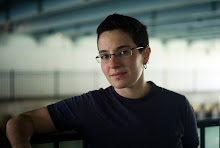
In my mind, there are two types of Chicagoans: the transplants and the lifers. The transplants are the ones from Indiana and Michigan, people from small towns who took the bus to the nearest big city as soon as they graduated high school. They see the city with different eyes; everything is new and exciting. The lifers have always been here, the city is like a childhood friend. They know the ins, the outs, and its deep dark secrets.
My father is a lifer. He grew up in South Shore, went to UIC which he still refers to as "circle", drove a cab to put himself through college and later grad school. Name two points in this city, he can tell you the fastest way to get there and where to stop for a good hot dog along the way.
I've acquired my father's knowledge of the city. Sometimes it feels like I know every side street, back alley, or short cut in this town. For this, I often find it difficult to read books about Chicago. While I love reading about my city, especially when the author can deliver the details, it can be obvious when the novel is written by a transplant and frustrating when they get the details wrong. Getting the facts straight isn't the only problem. The tell is in the dialogue, in the way the author describes scenes. Other lifers can tell you: Chicagoans think and talk about their city in a different way, and it carries over into the writing.
There have been plenty of fantastic books written about my fair city, and a good number of them were written by transplants. I could always tell. Until now.
Marcus Sakey, like many Chicago transplants, grew up in Michigan. But when I read his latest book, Good People, I forgot that he wasn't a lifer. He talks about the city the way my father does. He knows about the corruption, how the police and press work, the mindsets of the city's citizens and its criminals. Not only was it a gripping, suspenseful, give-you-a-heart-attack type of read, but it utilized the city, making it the perfect backdrop for his story. Hands down, it's the best Chicago book I've read this year, maybe ever, and the fact that it wasn't written by a lifer makes the book even more impressive. It's hard for me to see another transplant topping it, but then again, Sean Chercover's Trigger City is next on the list...
Friday, July 25, 2008


Tuesday, July 15, 2008
Your Market
One piece of advice newbie novelists are often told is not to write for the market. What is selling today might not be selling by the time your book is ready to go to print. Ultimately, I think this is good advice; you shouldn't create your story based on what types of books are hitting bestseller lists. I also believe that writing a compelling story should be the top priority, but I think there is some advantage to considering a market.
In a perfect world, the newbie novelist will finish a book, find a great agent, find a publisher and an editor and the book will hit the shelves without any road blocks. But which shelf will it hit? Should it be shelved in mystery or literature? Literature or young adult? Young adult or fantasy? The newbie novelist usually doesn't think about these questions, but agents and editors do, and if there are too many questions about how to market a novel, it probably won't get sold.
It doesn't hurt to think about audience when plotting your book. Ask yourself, "Who is going to want to read this? Who will I be marketing this too?" If you're writing Romance, your male audience is minimal. If you're writing Sci-Fi or Fantasy, you should think about what ages your novel will appeal to. In my mind, the broader the audience, the more the book will sell. The best example I can think of is Harry Potter; clearly a fantasy story, but one that appeals to both children and adults.
The issue of shelving and audience is definitely something I've dealt with in my own writing. As both a reader and a writer, I am more drawn to characters than I am to plot. I find it more gripping when the protagonist is faced with an internal conflict than an external one. However, in the world of crime fiction, the external conflict needs to be there. If there's too much character and not enough action, you'll lose your suspense fans. But literature fans probably won't even pick up the book because it's shelved in the crime fiction section. Currently, I'm going through the book to up the suspense and endanger my protagonist more. The book will be better and easier to sell, but the decision to change plot directions was purely based on the market.
The first step is writing the best book you possibly can. If your book isn't good, it won't sell. But there are plenty of good books that don't sell either, and I believe one of the primary reasons is that the book isn't marketable. Thinking about the potential audience and marketing possibilities as you write can be a good thing. It can steer you in a particular direction, making your story more solid and focused. By no means should you try to write the next Harry Potter or next DaVinci code, but looking at why those books were successful can help you shape your own novel and make it more appealing to agents and editors.
In a perfect world, the newbie novelist will finish a book, find a great agent, find a publisher and an editor and the book will hit the shelves without any road blocks. But which shelf will it hit? Should it be shelved in mystery or literature? Literature or young adult? Young adult or fantasy? The newbie novelist usually doesn't think about these questions, but agents and editors do, and if there are too many questions about how to market a novel, it probably won't get sold.
It doesn't hurt to think about audience when plotting your book. Ask yourself, "Who is going to want to read this? Who will I be marketing this too?" If you're writing Romance, your male audience is minimal. If you're writing Sci-Fi or Fantasy, you should think about what ages your novel will appeal to. In my mind, the broader the audience, the more the book will sell. The best example I can think of is Harry Potter; clearly a fantasy story, but one that appeals to both children and adults.
The issue of shelving and audience is definitely something I've dealt with in my own writing. As both a reader and a writer, I am more drawn to characters than I am to plot. I find it more gripping when the protagonist is faced with an internal conflict than an external one. However, in the world of crime fiction, the external conflict needs to be there. If there's too much character and not enough action, you'll lose your suspense fans. But literature fans probably won't even pick up the book because it's shelved in the crime fiction section. Currently, I'm going through the book to up the suspense and endanger my protagonist more. The book will be better and easier to sell, but the decision to change plot directions was purely based on the market.
The first step is writing the best book you possibly can. If your book isn't good, it won't sell. But there are plenty of good books that don't sell either, and I believe one of the primary reasons is that the book isn't marketable. Thinking about the potential audience and marketing possibilities as you write can be a good thing. It can steer you in a particular direction, making your story more solid and focused. By no means should you try to write the next Harry Potter or next DaVinci code, but looking at why those books were successful can help you shape your own novel and make it more appealing to agents and editors.
Sunday, July 13, 2008
Sun-Times Article
My Chicago-Lit piece ran in today's Sun-Times. Click here to read how Patricia Rosemoor and Marc Paoletti joined forces to create THE LAST VAMPIRE, published by Del Ray.
Friday, July 11, 2008
Live from ThrillerFest
I was very disappointed to have to miss ThrillerFest this year, but fortunately for me (and you) bloggers are reporting on the action. Check out Dave Montgomery's notes from the discussion "Biggest Mistake even Bestselling Writers Make."
Monday, July 07, 2008
What, When, Where, Why and How?
As a freelancer, writers are constantly asking me the following questions:
- How do you pick which books to review?
- How far in advance do you need a book in order to review it?
- Do I need a press kit, author bio, video trailer, etc?
- Why didn't you review my book?
- In your blog you said you loved the book. Why didn't you review it for Time Out or The Sun-Times?
Some of these issues have been addressed, but I thought I'd give a few of my own answers.
- There are many factors in choosing which books to review, even read. #1 is what the book is about. I tend to stay away from cozies, romance novels, westerns, etc. I read the back cover or the press release and if it sounds interesting, I'll start it. Then I'll keep reading until I don't want to anymore. That's the biggest trick to getting a book reviewed: write a book that a reviewer can't put down. But time is another factor. It can be a great book, but if the pub date has already passed, I can't really review it. Which brings us to...
- Get reviewers advanced copies ASAP. If your publisher doesn't do ARCs, ask the reviewer if they'd mind reading it in manuscript format and send it off yourself. Turnaround time can be super slow, especially with limited print space. Most of my editors are asking me for books that are to be published in September and October. That means the "to-be-reads" I have with August publication dates most likely won't get reviewed.
- Ultimately, I don't care about all the bells and whistles. Don't waste your press kits on me. But I'm not just a reviewer, I also write profiles and conduct Q&A's. If there's something interesting in your author bio, I want to know about it. You may end up with a 800-word feature rather than a 150-word review.
- Of all the questions, this is the one I hate the most. Just because I didn't review your book does not mean it isn't good. It usually means one of two things: either it just wasn't the book for me or because of any of the factors listed above, I couldn't review it. Even some of the books I loved couldn't get reviewed because of print space, timing, whatever. It's not a reflection on the book. But I think I speak for most reviewers when I say I hate getting asked this question and it will make me think twice before reading anything by the person who asked it.
- Another question I can't stand and part of me still doesn't believe I've been asked this. Part of the reason I have this blog is to give press to books that deserve it but for whatever reason, couldn't get in to print. It's for those books that I loved but were sent to me late or have too much of a niche market or for whatever reason my editors passed on. While I have control over what I read and what I review, I don't have control over what goes to print. The Sun-Times prints one page of reviews a week; whoever gets in is damn lucky. This is true for papers across the country. In a market where it's getting harder and harder to be reviewed, I say take press where you can get it. Trust me, if I love a book, I'm pitching it wherever I can and the only reason a book ends up on my blog is because I think it's worth mentioning.
I hope this clears some things up for authors. Of course, every reviewer works a little differently, but I'd say most would agree.
Monday, June 30, 2008
Getting Past the Speed Bumps
While I do not believe in writer's block, I do believe in writing speed bumps. There are points in the process where you're speeding along, where your fingers can't type fast enough and then all of a sudden, something in the road makes you slow down. Whether it's a plot problem, a character flaw, or the uncertainty of what comes next, there are numerous bumps throughout the journey that cause you to back away from the computer and think.
Every writer I know handles this stage differently. Some take a walk, others do housework, some read or do a crossword, while others simply stay in the chair and stare at the screen. I personally think that stepping back and letting the problem marinate a bit is healthy, but when does it become an excuse rather than a productive break? When are you simply avoiding the problem rather than working towards a solution?
I think the first step is identifying your habits. When you hit a speed bump in your writing, what happens? Do you suddenly remember a phone call you have to make? Do you look around and realize how cluttered the house is? Do you check your e-mail, then your facebook, then you're friend's facebook, then their friend's website, then click on a YouTube link from that website and so on? Knowing your usual attempts to run from a writing problem is the perfect way to avoid them. While I truly believe that taking breaks can be productive, I also am a firm believer in staying in the world of your story and that when you pop out of that world, you are avoiding the problem.
I cannot speak for other writers, so I will use myself as an example. When I hit a point in the writing that I need time to think and brainstorm, I cannot sit at the computer. So I do some laundry, wash the dishes, go for a run or a swim, anything that is quiet and that I can stay in my head. If I surf the web, I'm back in reality. If I read a book, I'm in someone else's fictional world. I strongly believe that, when you're writing, you should stay in the world of your story even if you need to step back from the computer. But our minds wander, it's inevitable. I'll be unloading the dishwasher thinking of how I can kill one character without another character knowing, and I'll see something or hear something that sends me on another train of thought. That's when you have to bring yourself back to your world, to the task at hand. Otherwise, you're not writing, you're just doing dishes.
While it may work for some people, I cannot understand how anyone can read a novel or watch TV as a way to get inspired or fix a problem in their story. Tasks that require lots of thinking and concentration generally don't work either, it takes your mind off your story. Identify things that inspire you without distracting you. Listen to music, take a walk, do some research, something that will keep you thinking about your story while letting new ideas and possibilities enter. Checking in every few minutes to make sure your mind hasn't wandered too far is usually necessary to keep focus.
I understand that this whole concept seems weird and vague, but I really think it's something that every writer struggles with. While we're into the writing and we're on a roll, there's nothing anyone can do to pry us away from the keyboard. But in order to have those spurts, it is necessary to plan and hitting bumps in the road is inevitable. The time spent away from the computer can be just as important as the time spent actually writing. Identifying the common distractions is the first step to avoiding them. That way, when you're significant other comes home to find you doing the crossword, you can honestly tell them that you're writing.
Every writer I know handles this stage differently. Some take a walk, others do housework, some read or do a crossword, while others simply stay in the chair and stare at the screen. I personally think that stepping back and letting the problem marinate a bit is healthy, but when does it become an excuse rather than a productive break? When are you simply avoiding the problem rather than working towards a solution?
I think the first step is identifying your habits. When you hit a speed bump in your writing, what happens? Do you suddenly remember a phone call you have to make? Do you look around and realize how cluttered the house is? Do you check your e-mail, then your facebook, then you're friend's facebook, then their friend's website, then click on a YouTube link from that website and so on? Knowing your usual attempts to run from a writing problem is the perfect way to avoid them. While I truly believe that taking breaks can be productive, I also am a firm believer in staying in the world of your story and that when you pop out of that world, you are avoiding the problem.
I cannot speak for other writers, so I will use myself as an example. When I hit a point in the writing that I need time to think and brainstorm, I cannot sit at the computer. So I do some laundry, wash the dishes, go for a run or a swim, anything that is quiet and that I can stay in my head. If I surf the web, I'm back in reality. If I read a book, I'm in someone else's fictional world. I strongly believe that, when you're writing, you should stay in the world of your story even if you need to step back from the computer. But our minds wander, it's inevitable. I'll be unloading the dishwasher thinking of how I can kill one character without another character knowing, and I'll see something or hear something that sends me on another train of thought. That's when you have to bring yourself back to your world, to the task at hand. Otherwise, you're not writing, you're just doing dishes.
While it may work for some people, I cannot understand how anyone can read a novel or watch TV as a way to get inspired or fix a problem in their story. Tasks that require lots of thinking and concentration generally don't work either, it takes your mind off your story. Identify things that inspire you without distracting you. Listen to music, take a walk, do some research, something that will keep you thinking about your story while letting new ideas and possibilities enter. Checking in every few minutes to make sure your mind hasn't wandered too far is usually necessary to keep focus.
I understand that this whole concept seems weird and vague, but I really think it's something that every writer struggles with. While we're into the writing and we're on a roll, there's nothing anyone can do to pry us away from the keyboard. But in order to have those spurts, it is necessary to plan and hitting bumps in the road is inevitable. The time spent away from the computer can be just as important as the time spent actually writing. Identifying the common distractions is the first step to avoiding them. That way, when you're significant other comes home to find you doing the crossword, you can honestly tell them that you're writing.
Tuesday, June 17, 2008
Character Debate
Lately, I've been thinking a lot about character. In my mind, characters are what make or break a book, which is why books like DaVinci Code and Jurassic Park didn't really interest me. All plot, no character.
I was talking with my neighbor yesterday about TV shows, particularly those on HBO and Showtime. He said he could never get into Oz or The Sopranos (two of my favorites) because he couldn't stand any of the characters.
"They're all horrible people," he said. "They're murderers who cheat on their wives and exploit people. I didn't care if they lived or died."
While I disagree that Tony Soprano and the inmates at Oz have no redeeming qualities, it proves my point that characters are the key element in a book's success. Protagonists don't necessarily have to be all good, but they certainly cannot be all bad. In my mind, the characters who are somewhere in between are the ones that are the most interesting. But ultimately, readers have to care about the characters in order to enjoy the book.
So how do you do it? How do you create characters that are memorable, interesting, and most importantly, characters that readers will care about? Let's look at some of crime fiction's most beloved characters (or at least my favorites):
Sam Spade, created by Dashiell Hammett, was good looking, meticulous, and could always get the best of anybody. Granted he was shifty and sometimes cold, but he was charming, cocky and easily captivated readers. In that 007 kind of way, he was always acting in the interest of justice and did it without breaking a sweat.
Jack Reacher, created by Lee Child, could easily be considered one of the most popular series characters in contemporary crime fiction. Reacher is an ex-military cop with no home, no phone, no driver's license, no ties. Although he has killed many and broken a few hearts, Reacher is always working for the greater good. His idea of justice does not always coincide with that of the authorities and he always works on his own. If any man was an island, it would be Reacher. But under the tough, not to mention good-looking, exterior, he cares for people and has a passion for making things right.
Chili Palmer, created by Elmore Leonard, is the perfect example of a bad boy that's easy to root for. Palmer is loan shark and aspiring film producer who rolls with Miami's criminal underground. He's slick and smooth with eyes in the back of his head. Yes, he's a criminal, but he's a criminal with a conscience. The people he's extorting aren't good people; they're not innocent. His charm allows readers to overlook the criminal label and root for him throughout the book.
Harry Bosch, created by Michael Connelly, is a more controversial series character. I find that people either love him or hate him. This LAPD homicide cop is a maverick and sometimes too stereotypical as a detective. He drinks too much, works too much, and to him, each case is personal. But his passion for crime-solving carries over to the reader, and you can't help but root for him. His intelligence and determination make it possible to overlook his flaws.
John Rain, created by Barry Eisler, is another controversial protagonist as he is a Japanese assassin. He is a hit-man who specializes in making his victims appear as if they've died of natural causes. So how can he be a hero if he's a criminal? He has a code: he doesn't kill women or children, he doesn't kill non-principles, etc. Ultimately, this killer has a conscience, and like Reacher, he's smart, smooth and has minimal ties. Rain's code is what allows readers to overlook his hit-man occupation and his personality and charm is what makes them fall in love.
All of these characters are, in a sense, good people. This makes them relatable. They are all flawed, which makes them interesting. They work toward the greater good and want to deliver justice, which makes it easy to root for them. Most of them are charming and good looking, which always helps. Personally, I care about all of these protagonists when I'm reading them. I want them to succeed. If I didn't, I couldn't enjoy the book.
Feel free to comment on your favorite characters or give traits that are necessary for a character to be captivating.
I was talking with my neighbor yesterday about TV shows, particularly those on HBO and Showtime. He said he could never get into Oz or The Sopranos (two of my favorites) because he couldn't stand any of the characters.
"They're all horrible people," he said. "They're murderers who cheat on their wives and exploit people. I didn't care if they lived or died."
While I disagree that Tony Soprano and the inmates at Oz have no redeeming qualities, it proves my point that characters are the key element in a book's success. Protagonists don't necessarily have to be all good, but they certainly cannot be all bad. In my mind, the characters who are somewhere in between are the ones that are the most interesting. But ultimately, readers have to care about the characters in order to enjoy the book.
So how do you do it? How do you create characters that are memorable, interesting, and most importantly, characters that readers will care about? Let's look at some of crime fiction's most beloved characters (or at least my favorites):
Sam Spade, created by Dashiell Hammett, was good looking, meticulous, and could always get the best of anybody. Granted he was shifty and sometimes cold, but he was charming, cocky and easily captivated readers. In that 007 kind of way, he was always acting in the interest of justice and did it without breaking a sweat.
Jack Reacher, created by Lee Child, could easily be considered one of the most popular series characters in contemporary crime fiction. Reacher is an ex-military cop with no home, no phone, no driver's license, no ties. Although he has killed many and broken a few hearts, Reacher is always working for the greater good. His idea of justice does not always coincide with that of the authorities and he always works on his own. If any man was an island, it would be Reacher. But under the tough, not to mention good-looking, exterior, he cares for people and has a passion for making things right.
Chili Palmer, created by Elmore Leonard, is the perfect example of a bad boy that's easy to root for. Palmer is loan shark and aspiring film producer who rolls with Miami's criminal underground. He's slick and smooth with eyes in the back of his head. Yes, he's a criminal, but he's a criminal with a conscience. The people he's extorting aren't good people; they're not innocent. His charm allows readers to overlook the criminal label and root for him throughout the book.
Harry Bosch, created by Michael Connelly, is a more controversial series character. I find that people either love him or hate him. This LAPD homicide cop is a maverick and sometimes too stereotypical as a detective. He drinks too much, works too much, and to him, each case is personal. But his passion for crime-solving carries over to the reader, and you can't help but root for him. His intelligence and determination make it possible to overlook his flaws.
John Rain, created by Barry Eisler, is another controversial protagonist as he is a Japanese assassin. He is a hit-man who specializes in making his victims appear as if they've died of natural causes. So how can he be a hero if he's a criminal? He has a code: he doesn't kill women or children, he doesn't kill non-principles, etc. Ultimately, this killer has a conscience, and like Reacher, he's smart, smooth and has minimal ties. Rain's code is what allows readers to overlook his hit-man occupation and his personality and charm is what makes them fall in love.
All of these characters are, in a sense, good people. This makes them relatable. They are all flawed, which makes them interesting. They work toward the greater good and want to deliver justice, which makes it easy to root for them. Most of them are charming and good looking, which always helps. Personally, I care about all of these protagonists when I'm reading them. I want them to succeed. If I didn't, I couldn't enjoy the book.
Feel free to comment on your favorite characters or give traits that are necessary for a character to be captivating.
Friday, May 30, 2008
The Good and the Bad
Maybe it's just a Jewish thing, but when someone tells me they've got good news and they've got bad news, I always want to hear the bad news first. In fact, the good news has little to no importance. Because no matter how good that news may be, I know that something bad is attached to it.
When it comes to critique, I think most people are like me. They hear all the praises, how this character was really interesting, how that paragraph was really well written, but in their minds, it doesn't really matter. They're waiting for the "but", for the criticism. They want to find out what's wrong with their story and fix it, they don't care about having their ego stroked.
Most critique groups are like mine, everyone starts by telling the author what's working before leading into what's not. So why do we do it? If all we want to hear is the bad so we can make revisions, what's the point of giving positive feedback?
When it comes to critique, I think most people are like me. They hear all the praises, how this character was really interesting, how that paragraph was really well written, but in their minds, it doesn't really matter. They're waiting for the "but", for the criticism. They want to find out what's wrong with their story and fix it, they don't care about having their ego stroked.
Most critique groups are like mine, everyone starts by telling the author what's working before leading into what's not. So why do we do it? If all we want to hear is the bad so we can make revisions, what's the point of giving positive feedback?
- Reassurance. An all bad critique could easily send a sensitive author out on a ledge. Even the most hard-core, no nonsense writers need to know that they do not suck. By starting out with positive feedback, you let the author know that there were lots of parts you enjoyed and that the story has some merit.
- Credibility. By telling an author what you enjoyed about their piece, you're letting them know that you are interested in the story and wanting to make it better. If I know someone liked the chapter I handed in, I'm far more receptive to their critique. Even if it needs a total rewrite or there were some major flaws, knowing that the reader is invested makes me more open to making those changes. If someone isn't invested or even interested your work, are you going to take their comments to heart?
- Knowledge. By knowing what's working, it's easier to identify places where it isn't. Say someone tells me, "I'm really pulled to this chapter because of the sense of place. I can clearly see and the city and it's adding to the suspense of the novel." If another chapter feels flat, and I know that place plays a big role in the story I'm telling, heightening that sense of place can breathe life into the chapter. Your strengths are your tools, they can be used to fix problems, but first, you have to know what those strengths are.
- Positive Criticism. This is something I learned at Columbia that I have taken with me to various critique groups. Some call it sugar coating but I call it positive criticism. Say there's no real sight of the main character; you don't really know what he looks like. Instead of flat out saying, "I need a description" or "I have no idea what this guy looks like" you put a positive spin on it. Say, "I'm intrigued by the protagonist. I want to know what he looks like, get a better sight of him." Which comment would inspire you to go back and revise? Next time you're in a critique session and the story feels rushed and summarized or a plot point feels too convenient, try putting a positive spin on it. Say, "This scene is really poignant. Is there a way to slow it down, really make me feel it?" or "Everything up until this point has been really well crafted and this plot point sticks out as convenient. Is there a way to change it so it's just as tight as the rest of the story?" It may feel like sugar coating, but try it some time and see how the author reacts differently.
While I tend to focus on the bad news rather than the good, I know that positive feedback has its place in a critique session. Care to weigh in? In critique group, do you just like to hear the bad stuff or do you care about the good? Are there other ways positive feedback can help the writing?
Friday, May 16, 2008
Head-Hopping Overload
Often, reviewers are asked, “What is your biggest pet peeve in books? What is the one thing that would make you put a book down, even if it was good so far?” My answer has always been the same: head-hopping.
Head-hopping is shifting point of view without a section or chapter break. For example:
Unfortunately for me, there seems to be a surge of authors who head-hop throughout their novels, causing many partially read books to find their way into my giveaway pile. The last three books I picked up, had a jarring POV shift before page 50. And what’s very unfortunate, is that many of these books are well plotted and have interesting characters, but every time the point of view shifts mid paragraph, my reading is stalled, the flow halted. I’m not an unforgiving reader, if the story is keeping my interest, I’ll overlook one or two POV issues. But if the author continuously switches and head hops, reading becomes more frustrating than enjoyable, and I have to put the book down.
Head-hopping is something I learned about during my years at Columbia, but I was sure most writers figured it out at some point down the line. Has there been some change? Are they now teaching that it is okay to shift point of view mid-paragraph? Is it the writers that are head-hopping more and more or are the editors turning a blind eye? Before hitting the shelves, a book has to pass inspection by so many people, so I don’t believe the POV shifts are mistakes that weren’t caught.
Is it just me?
Head-hopping is shifting point of view without a section or chapter break. For example:
While the entire passage is written in third person, we’re in Jane’s head one minute and in Dick’s head the next. Those shifts are jarring and pull me out of the story, enough where I need to put the book down. There has been the occasional literary novelist who is able to pull it off, but in genre fiction, I believe head-hopping to be the mark of amateur writing.Jane shook with panic as she stared down the barrel of the gun. She was sure Dick didn’t want to kill her, it wasn’t like him, but a fire burned behind his eyes that she never saw before.
“Stay where you are,” he commanded when he spotted her inching towards the door. He couldn’t let her get away, not after what she did. He watched as a single tear dripped down her cheek and he knew then that she needed to die.
Unfortunately for me, there seems to be a surge of authors who head-hop throughout their novels, causing many partially read books to find their way into my giveaway pile. The last three books I picked up, had a jarring POV shift before page 50. And what’s very unfortunate, is that many of these books are well plotted and have interesting characters, but every time the point of view shifts mid paragraph, my reading is stalled, the flow halted. I’m not an unforgiving reader, if the story is keeping my interest, I’ll overlook one or two POV issues. But if the author continuously switches and head hops, reading becomes more frustrating than enjoyable, and I have to put the book down.
Head-hopping is something I learned about during my years at Columbia, but I was sure most writers figured it out at some point down the line. Has there been some change? Are they now teaching that it is okay to shift point of view mid-paragraph? Is it the writers that are head-hopping more and more or are the editors turning a blind eye? Before hitting the shelves, a book has to pass inspection by so many people, so I don’t believe the POV shifts are mistakes that weren’t caught.
Is it just me?
Monday, May 12, 2008
More Reviews
My reviews of STALKED, LADY KILLER, EASY INNOCENCE, and NO TIME FOR GOODBYE which appeared in issue #23 of Crimespree Magazine are now available online. Or support the magazine and buy the print edition. Issue #24 runs my reviews of FIRST THE DEAD, CITY OF HUMAN REMAINS, and CITY OF THE SUN. (It also showcases a horrible photo of me from Love is Murder. I'll remember this Jordon!) Enjoy!
Sunday, May 11, 2008
Augusten Burroughs Q&A
Click here to check out my interview with one of my favorite authors, Augusten Burroughs, which ran in today's Chicago Sun-Times.
Wednesday, May 07, 2008
Clarifying the Qualifier
Mystery. Thriller. Suspense. Crime Fiction. Cozy. Hard Boiled. Noir. Pulp.
All of these are labels and, as I've said before, labels make a difference. But do people really know what these labels mean? I have had countless Lee Child fans claim they don't like mysteries or Harlan Coben fans say they're not big on noir fiction. Because there are so many sub-genres, so many qualifiers, many readers (or writers) have lost sight of their meaning.
Mystery vs. Thriller: Gayle Lynds had the perfect explanation of the distinction between mystery and thriller. She says that in a mystery, the bomb goes off in the first chapter and the story is spent trying to figure out the how and the why. In a thriller, there is a bomb in the room and the story is spent trying to prevent it from going off. In mystery, the big event happens at the beginning of the book and in thrillers it happens at the end. This is the best explanation I've heard, so this is the one I go with.
Suspense: This one is pretty self-explanatory. Suspense novels are books that are driven by suspense. This could apply to both mystery and thriller, even romance and historical. Usually, I deam suspense novels to be mostly plot driven, but there are no hard and fast rules. But just because it's a page turner, doesn't necessarily make it a suspense novel. If the thing that's most important to the central character is put at risk (family, life, the world), and that risk is driving the story forward, I'd say you have a suspense novel.
Crime Fiction: Again, pretty self-explanatory. Any work of fiction that centers around a crime. Therefore, most mysteries, thrillers and suspense novels can fall into the category of crime fiction. It's a very broad label and therefore, it's the one I use when people ask me what I write.
Cozy: Cozies are books where all sex and violence takes place off stage. Think Agatha Christie and anything with a cat on the cover. Usually, this qualifier applies to mysteries; I'd think it'd be difficult to write a Cozy Thriller. Historically, it was the British way of writing mysteries, though there are plenty of Americans who have carried on the tradition.
Hard Boiled: It's the opposite of cozy fiction. Not only does Hard Boiled crime fiction portray violence and sex, it does so in a very hard, unsentimental way. Think Dashiell Hammett and Raymond Chandler. Just because the book contains violence or sex doesn't necessarily make it hard boiled, it depends on the way the violence or sex is written. No sentimental love scenes in hard boiled fiction.
Noir: Noir and Hard Boiled fiction tend to be confused. While both have the same gritty, unapologetic writing style, I think of Hard Boiled as specific to detective fiction. In Noir fiction, the main character is someone tied directly to the crime, usually a victim or a suspect, rather than a detective called in to solve a crime he had nothing to do with. But to me, noir has more to do with the tone and style of the book than the subject matter.
Pulp: Pulp fiction originally referred to the cheap short story magazines and mass market paperbacks of the 1950's. Think glossy covers of damsels in distress with hunky detectives or action heroes coming to their rescue. Pulp fiction can span all genres, but the stories are usually violent and crime-related. I think of pulps as centrally plot driven with little to no character development, but I'm sure there are plenty that would prove my theory wrong.
Hopefully this will shed some light on the various sub-genres and help you figure out what type of fiction you like to read and write. And when an author tells you he writes hard boiled mysteries or pulp noir, you'll have an idea if you would like their books.
All of these are labels and, as I've said before, labels make a difference. But do people really know what these labels mean? I have had countless Lee Child fans claim they don't like mysteries or Harlan Coben fans say they're not big on noir fiction. Because there are so many sub-genres, so many qualifiers, many readers (or writers) have lost sight of their meaning.
Mystery vs. Thriller: Gayle Lynds had the perfect explanation of the distinction between mystery and thriller. She says that in a mystery, the bomb goes off in the first chapter and the story is spent trying to figure out the how and the why. In a thriller, there is a bomb in the room and the story is spent trying to prevent it from going off. In mystery, the big event happens at the beginning of the book and in thrillers it happens at the end. This is the best explanation I've heard, so this is the one I go with.
Suspense: This one is pretty self-explanatory. Suspense novels are books that are driven by suspense. This could apply to both mystery and thriller, even romance and historical. Usually, I deam suspense novels to be mostly plot driven, but there are no hard and fast rules. But just because it's a page turner, doesn't necessarily make it a suspense novel. If the thing that's most important to the central character is put at risk (family, life, the world), and that risk is driving the story forward, I'd say you have a suspense novel.
Crime Fiction: Again, pretty self-explanatory. Any work of fiction that centers around a crime. Therefore, most mysteries, thrillers and suspense novels can fall into the category of crime fiction. It's a very broad label and therefore, it's the one I use when people ask me what I write.
Cozy: Cozies are books where all sex and violence takes place off stage. Think Agatha Christie and anything with a cat on the cover. Usually, this qualifier applies to mysteries; I'd think it'd be difficult to write a Cozy Thriller. Historically, it was the British way of writing mysteries, though there are plenty of Americans who have carried on the tradition.
Hard Boiled: It's the opposite of cozy fiction. Not only does Hard Boiled crime fiction portray violence and sex, it does so in a very hard, unsentimental way. Think Dashiell Hammett and Raymond Chandler. Just because the book contains violence or sex doesn't necessarily make it hard boiled, it depends on the way the violence or sex is written. No sentimental love scenes in hard boiled fiction.
Noir: Noir and Hard Boiled fiction tend to be confused. While both have the same gritty, unapologetic writing style, I think of Hard Boiled as specific to detective fiction. In Noir fiction, the main character is someone tied directly to the crime, usually a victim or a suspect, rather than a detective called in to solve a crime he had nothing to do with. But to me, noir has more to do with the tone and style of the book than the subject matter.
Pulp: Pulp fiction originally referred to the cheap short story magazines and mass market paperbacks of the 1950's. Think glossy covers of damsels in distress with hunky detectives or action heroes coming to their rescue. Pulp fiction can span all genres, but the stories are usually violent and crime-related. I think of pulps as centrally plot driven with little to no character development, but I'm sure there are plenty that would prove my theory wrong.
Hopefully this will shed some light on the various sub-genres and help you figure out what type of fiction you like to read and write. And when an author tells you he writes hard boiled mysteries or pulp noir, you'll have an idea if you would like their books.
Thursday, May 01, 2008
Facing the Revision
Over a month ago, I had reached the conclusion that Streetwalk, the novel I'm currently querying agents with, deserved a rewrite. A couple trusted agents and one of my lovely critique members gave some wonderful feedback that called for major structural changes. I would have to rehash most of the plot, pretty much rewrite the entire book, and scrap pages upon pages of my hard work. That was over a month ago.
Revision had always been daunting to me and one of my least favorite stages of writing. I liked writing the new stuff, exploring, creating. Plus, my difficulty stepping back and looking at the story as a whole made the process even more tedious. So I spent a month thinking and brainstorming, something my girlfriend likes to call procrastinating. I hate it when she's right, so I had to prove her wrong.
I spent Monday coming up with a game plan. I created lists of items that needed to be addressed, I recreated the outline to fit in with the story structure, I cleaned the house and I stocked the fridge. I wouldn't give myself any excuses.
On Tuesday, I unplugged the phone, turned off the internet and wouldn't let myself leave the house until I had a grasp on this revision. And you know what? It worked. I went through, page by page, deleting and rewriting and cutting and pasting, and though I threw out six chapters and wrote whole new ones, it wasn't as difficult and as tedious as I thought. I have hit my stride. Tuesday night, after working from 7am to 7pm, I had revised over 100 pages of the novel and let myself call it quits. And though I can't ignore my e-mails, phone calls, and chores everyday, getting the rhythm and proper foundation has made all the difference.
Revision Tips:
Revision had always been daunting to me and one of my least favorite stages of writing. I liked writing the new stuff, exploring, creating. Plus, my difficulty stepping back and looking at the story as a whole made the process even more tedious. So I spent a month thinking and brainstorming, something my girlfriend likes to call procrastinating. I hate it when she's right, so I had to prove her wrong.
I spent Monday coming up with a game plan. I created lists of items that needed to be addressed, I recreated the outline to fit in with the story structure, I cleaned the house and I stocked the fridge. I wouldn't give myself any excuses.
On Tuesday, I unplugged the phone, turned off the internet and wouldn't let myself leave the house until I had a grasp on this revision. And you know what? It worked. I went through, page by page, deleting and rewriting and cutting and pasting, and though I threw out six chapters and wrote whole new ones, it wasn't as difficult and as tedious as I thought. I have hit my stride. Tuesday night, after working from 7am to 7pm, I had revised over 100 pages of the novel and let myself call it quits. And though I can't ignore my e-mails, phone calls, and chores everyday, getting the rhythm and proper foundation has made all the difference.
Revision Tips:
- Have a plan. If you have an outline or at least an idea of where you need to take your story, you won't get blocked midway through the process
- Rewrite. I've seen many people just tinker with existing scenes, trying to make them fit into the new story. It's better to chuck it and start anew. The scene will come off as fresh and it will be more fitting to the story. Later, you can always add bits of dialogue or description from the previous version.
- Don't give in to distraction. If you're like me, when you're in the writing zone, nothing could tear you out of it. But with revision, you're more removed, more in tune with the world around you, especially when you hit a block. Don't let yourself check the internet or turn on the TV or sit down with a book. Glue yourself to the chair and force yourself to work through the hard stuff.
- Don't leave when you're blocked. I can't revise an entire novel in one day, therefore, at some point I'm going to have to stop and leave it for tomorrow. The temptation is to leave when you lose steam or you reach a point where you don't know what's going to happen next. That is not where to stop. It will just make it more difficult to start work the following day. A Chicago Contingent member calls it the 80-20 rule: only write 80% of what you know and leave that last 20% until you figure out more. It makes it easier to start work for the day if you know exactly what you need to do.
- Talk it out. It always helps to bounce ideas off of someone but if you don't have anyone to listen, talking it out to yourself sometimes helps. Tell the story, in your own words, like an improvised synopsis. If you hit blocks when you're telling it, chances are you'll hit blocks when you write it. If the plot sounds cheesy or coincidental when you say it aloud, it probably is. Talking the story through before it hits the page often helps work out some of the kinks.
- Don't edit or fact check. That comes later. First, get the best draft that you can, tell the best story that you can. Line editing and fact checking aren't creative endeavors; you can do them whenever. Don't lose your creative drive by stopping to check the syntax of a word or to make sure a street really exists in the city you're writing about. Just write.
I've always hated the revision process and I've always had to tell myself to get used to it. Once I think I've "finished" this book, enough to send out to agents at least, the revision process has only begun. The agent will want revisions, then if it sells, the editor will want at least two. We're always learning things about our writing processes and this week, I learned that revision isn't such a bad stage. I just had to approach it with the right attitude and from the right angle.
Feel free to leave your revision strategies, because I assume I'm not the only one who finds this process daunting. But it's a necessary step in the writing process, just as much as reading aloud or writing query letters. We have to do it, so it helps to have a plan.
Wednesday, April 23, 2008
Is Brand Name Better?
When it comes to publishing and promotion, many authors like to talk about branding, that like any product being sold, people look for brand name recognition. I believe there are a few ways book buyers consider brands:
- Brand-name author. People buy books all the time just because of the author, myself included. If you are publishing numerous books with consistent style and content, you create a brand for yourself and people will buy books solely based on track record.
- Brand-name series. This isn't only applicable to series characters, there can be other series branding as well. Soho Crime publishes books that are set in foreign countries so when you pick up a Soho book you expect to be transported. Blogs like The Outfit group authors together and send the message, "If you like one of our books, you'll probably like the others."
- Brand-name publisher. When I receive books to review, one of the first things I look at is the publisher. Admittedly, it makes a difference. There are certain lines and certain houses I tend to enjoy over others. This has nothing to do with how large or small the house is; it has everything to do with track record. If I've read three lousy books released by publisher X, what are the chances of me picking up another?
- Brand-name genre. The genre you write in is another form of brand, and within that genre, there are dozens of sub-genres. Do you think cat cozy fans read the backs of those books before they buy them or do they just see "cat" in the title and know they'll like it? Why do you think people subscribe to Harlequin, receiving whichever title is released that month? People are loyal to their genre and will pick up books solely based on where their shelved or how they're categorized.
Some of this may sound silly and superficial. After all, we read books based on content and quality of writing, right? It doesn't matter who published it or where the book is shelved. The reason we continue to read certain authors or certain genres is because they're consistently good, but if the book is bad, it's bad.
But how many people consistently buy authors like James Patterson and Tom Clancy, who barely write their own books anymore? If we're all about quality and consistency, wouldn't we notice when a different author is writing each of their books? To me, it's like the drug companies changing their formulas or Starbucks changing coffee roasters. Will people notice a difference? And if they do, will they even care?
As a person who buys generic everything and couldn't care less about labels, I find it interesting that such superficial branding has found its way into book buying. Like anything, publishing is a business and branding is vital to sales. But what happens when the quality of the product suffers? What happens when people buy books for the author or publisher regardless of the writing quality? Where does that leave newbie writers who are talented, but don't have a brand?
Wednesday, April 16, 2008

My People Magazine
I find that one of the most common questions fans ask writers is, "How much of it is true?" or "Are you a lot like your protagonist?" Whether it's fiction, creative nonfiction, or has a big memoir stamp across the front, readers want to know whether they're reading about the author or an entirely made-up character.
As much genre fiction as I read, the truth is, a really enjoy a good memoir. Authors like Augusten Burroughs, Dave Sedaris, and James Frey make their living off telling their life stories. When people asked me if I ever thought about writing memoir I always told them you get one life story, but these authors seem to have a never ending batch. Other authors, like Virginia Woolf, Truman Capote, and Sylvia Plath told fictionalized versions of their life stories, changing details and exaggerating events to create a more interesting read. Knowing that these books do not have the memoir stamp, I search between the lines, looking for the authors within the characters, wondering which events are true and which are fiction.
This week I interviewed a memoirist for the Sun-Times, and it was the oddest sensation of feeling like I knew everything about this person because I read their book. And I really think it's because I have this desire to know about the lives of authors that I read memoir and love writing author profiles.
I don't know actresses or pop stars. I don't read the celebrity rags or watch E! True Hollywood Story. I don't know which actress adopted a baby from Cambodia after divorcing the hot costar of her recent Hollywood blockbuster. And frankly, I don't care. But is reading memoirs the equivalent of reading People magazine or the unauthorized biography of some under age pop star? Is viewing author websites and signing up for their newsletter the same as joining some TV actress's fan club? Time and time again, I have said how disgusting our obsession with celebrity gossip is and I don't understand why people are so drawn to it, but am I any better?
While books enhance your brain and I'm pretty sure fluff magazines could cause it to rot, I believe the intention is pretty much the same. We all have a desire to learn about the artists we love, to meet them and see what they're like. Some people watch Access Hollywood, others read Us Weekly. I read memoirs and author websites and occasionally, I have the opportunity to interview a writer and find out for myself who is the real person behind the novel.
As much genre fiction as I read, the truth is, a really enjoy a good memoir. Authors like Augusten Burroughs, Dave Sedaris, and James Frey make their living off telling their life stories. When people asked me if I ever thought about writing memoir I always told them you get one life story, but these authors seem to have a never ending batch. Other authors, like Virginia Woolf, Truman Capote, and Sylvia Plath told fictionalized versions of their life stories, changing details and exaggerating events to create a more interesting read. Knowing that these books do not have the memoir stamp, I search between the lines, looking for the authors within the characters, wondering which events are true and which are fiction.
This week I interviewed a memoirist for the Sun-Times, and it was the oddest sensation of feeling like I knew everything about this person because I read their book. And I really think it's because I have this desire to know about the lives of authors that I read memoir and love writing author profiles.
I don't know actresses or pop stars. I don't read the celebrity rags or watch E! True Hollywood Story. I don't know which actress adopted a baby from Cambodia after divorcing the hot costar of her recent Hollywood blockbuster. And frankly, I don't care. But is reading memoirs the equivalent of reading People magazine or the unauthorized biography of some under age pop star? Is viewing author websites and signing up for their newsletter the same as joining some TV actress's fan club? Time and time again, I have said how disgusting our obsession with celebrity gossip is and I don't understand why people are so drawn to it, but am I any better?
While books enhance your brain and I'm pretty sure fluff magazines could cause it to rot, I believe the intention is pretty much the same. We all have a desire to learn about the artists we love, to meet them and see what they're like. Some people watch Access Hollywood, others read Us Weekly. I read memoirs and author websites and occasionally, I have the opportunity to interview a writer and find out for myself who is the real person behind the novel.
Monday, April 07, 2008
Not So Standard English
Spending a week with my Brooklynite family and reading Richard Marinick and June Hampson's latest novels has left me thinking a lot about dialect. Anyone who has heard Brooklyn Jews talk knows that there’s not only a specific accent, but specific lingo and sentence structure as well. The subject comes at the end of the sentence, such as, “A saint is what he is!” or “So beautiful, her face!” Of course, if the speaker was from an older generation, they would say “A mentsh is what he is!” or “Sheyn punim!” All week, I was immersed in this dialect to the point where I began inserting bits of Yiddish into my sentences and shaking my hand as I spoke.
I’m currently reading June Hampson’s Damaged Goods, a thriller set in 1960’s Britain, and the dialect the characters use is far different from what I’m used to. My brain has had to translate the various British sayings and reread the words phonetically spelled out to convey the English accent. It brings authenticity and easily pulls the reader into the world of the novel, but at times, my need to translate interrupts the flow of the storytelling.
So when is it too much? When accents and dialects are true to the setting it can add an interesting facet to a story. But when does it become too overbearing? When does the need to translate and think about certain words take away from the suspense and flow of the storytelling?
When I was writing Thou Shall Not, I was constantly questioning when to insert the Yiddish or Hebrew I knew the characters would use and when to hold back and give the English translation. Fortunately, I live with a shikse who went through the manuscript and told me which words she couldn’t translate through the context of the sentence, but for most writers, it’s a judgment call. In the case of Hampson’s novel, I think she could have held back some of the phonetic spelling and left it up to the reader to hear the characters’ accents, but I am still able to follow the story. In the case of Marinick, I found the dialect too complicated to follow and I ended up putting the novel down. It was too hard to get into the story or be drawn to the characters when I had to read each paragraph twice and translate it in my head. Authors like Dennis Lehane and Russell James know how to strike a balance between dialect and standard English, knowing that it is sometimes necessary to hold back slang for the sake of readability.
A good trick I’ve learned is to read things aloud. If your tongue trips on words or stumbles through certain paragraphs, you should revise. I also sometimes like to write two different versions of the sentence. If you take away the slang or the accents, is anything lost? What do you gain by including vernacular? Is one sentence clearer than the other? Easier to read?
Though there are plenty of books I’ve enjoyed with highly stylized writing or that were heavy on slang, they tend to be exceptions to the rule. Authors such as Irvine Welsh and Zora Neale Hurston have made careers on writing in dialect, but their novels are far from easy reads.
I’d love for others to weigh in on this. Is dialect a turn off or turn on? Should authors only worry about staying true to their characters or should they hold back for the sake of readability? And lastly, is writing in dialect the same as creating a series character? Are you branding your writing as highly stylized or heavy on slang?
I’m currently reading June Hampson’s Damaged Goods, a thriller set in 1960’s Britain, and the dialect the characters use is far different from what I’m used to. My brain has had to translate the various British sayings and reread the words phonetically spelled out to convey the English accent. It brings authenticity and easily pulls the reader into the world of the novel, but at times, my need to translate interrupts the flow of the storytelling.
So when is it too much? When accents and dialects are true to the setting it can add an interesting facet to a story. But when does it become too overbearing? When does the need to translate and think about certain words take away from the suspense and flow of the storytelling?
When I was writing Thou Shall Not, I was constantly questioning when to insert the Yiddish or Hebrew I knew the characters would use and when to hold back and give the English translation. Fortunately, I live with a shikse who went through the manuscript and told me which words she couldn’t translate through the context of the sentence, but for most writers, it’s a judgment call. In the case of Hampson’s novel, I think she could have held back some of the phonetic spelling and left it up to the reader to hear the characters’ accents, but I am still able to follow the story. In the case of Marinick, I found the dialect too complicated to follow and I ended up putting the novel down. It was too hard to get into the story or be drawn to the characters when I had to read each paragraph twice and translate it in my head. Authors like Dennis Lehane and Russell James know how to strike a balance between dialect and standard English, knowing that it is sometimes necessary to hold back slang for the sake of readability.
A good trick I’ve learned is to read things aloud. If your tongue trips on words or stumbles through certain paragraphs, you should revise. I also sometimes like to write two different versions of the sentence. If you take away the slang or the accents, is anything lost? What do you gain by including vernacular? Is one sentence clearer than the other? Easier to read?
Though there are plenty of books I’ve enjoyed with highly stylized writing or that were heavy on slang, they tend to be exceptions to the rule. Authors such as Irvine Welsh and Zora Neale Hurston have made careers on writing in dialect, but their novels are far from easy reads.
I’d love for others to weigh in on this. Is dialect a turn off or turn on? Should authors only worry about staying true to their characters or should they hold back for the sake of readability? And lastly, is writing in dialect the same as creating a series character? Are you branding your writing as highly stylized or heavy on slang?
Wednesday, March 19, 2008
Tax Tips from the Accountant's Daughter
Well, it's that time of year again, when we all scrounge up receipts, collect year-end statements, and try to remember every possible deduction. And though many of the writers I know make most of their income as a cafe barista or a Borders clerk, that doesn't change the fact that their primary occupation is writer and that they can deduct the necessary business expenses. Fortunately, my father is an accountant and has taught me many tricks of his trade. So in honor of tax time, here are some deductions writers should never forget:
- Travel. Anytime you traveled for research purposes, to and from a conference or book signing, all of those expenses can be deducted. The cab ride to the airport, the airfare or the miles driven on your car, all should be reported to your accountant. (There are different rules for different deductions so I'd let the expert sort that out.)
- Home Office. Most writers work from home and therefore have a slew of things to deduct. If you have an office that you use exclusively for writing (or are at least able to prove that you do) you can deduct a portion of your rent or mortgage. If you purchased a new computer, printer, or fax that you'll use exclusively for writing, you can deduct that as well. In addition to the obvious office supplies and postage stamps, you can also deduct a portion of your electric and gas bill. If you're working from home, all of the things you use to keep your office going can be deducted as business expenses.
- Entertaining. Though you cannot deduct entire bar bills and dinner checks, it is possible to deduct portions of your entertaining expenses. If you take another writer out for drinks, treat an agent to dinner or take them to a ball game, all of that should be reported to your accountant. Little tip, next time you're at a conference, each member of your entourage should offer to get a round. That way, instead of each person only paying for themselves, they are paying to entertain colleagues and can therefore deduct it for tax purposes.
- Research. This one can get a bit tricky and I believe deciding what to and not to deduct as research expenses is a matter of risk taking. If you're writing a book set in Japan, by all means, go to Japan and deduct the trip, hotel stay and various restaurant and bar bills as research. If your protagonist is a bartender and you deduct every bar bill, every weekend, as research purposes, that's a bit more risky. When doing research for a novel or article, make sure that everything you spend is a necessary expense and that it is directly related to what you're writing about.
*Note for the newbies. Just because you didn't earn a lot as a writer this past year, doesn't mean you are not a writer and cannot deduct these expenses. The general rule of thumb is that you should make a profit within 5 years. And even then, you only run the risk of being audited, and if you do get audited, you only need to convince the IRS that you are in business to make a profit. Come on, we're writers. We can convince the pope that Jesus was just a hippie. If you are serious about writing, you will eventually make a profit, probably well within the 5-year expectation, but until then, don't be afraid to deduct.
Friday, March 07, 2008
Zen and the Art of Writing
 I've recently been very into yoga. What started out as a one day a week cross training that my swim coach recommended has turned into a four days a week, I'm going to do a headstand if it kills me, addition to my fitness routine. After sitting at a computer all day, the bending and twisting works wonders for my neck, shoulders and back.
But this week, one of my instructors said something that resonated with me. As we were preparing to go into "upward bow", basically a full back bend, he instructed us to take these poses playfully. He acknowledged that many were challenging and physically demanding, but if you approach them as a child would, unconcerned and without fear of failure, that you'd be able to accomplish poses you never thought you could. And sure enough, me, the most inflexible, ungraceful person ever, achieved "upward bow" that day, and I attribute it completely to my playful attitude.
 I've written many times about the need to approach writing with a seriousness and a professionalism, and though I still agree, I've been thinking that the yoga instructor has a point. What would happen if we viewed our writing playfully, without fear of failure or judgement? After all, isn't that why we started writing in the first place? Because it was fun?
I've found that the shift in attitude has allowed me to break down all types of censors, some I never knew I had. I'm currently working on a short story for another anthology and so far, it has been quite the process. I've often found myself stuck, without words coming through and total blocks in plot movement. But today, when I sat down, I didn't think about the 800 words I needed to finish or the deadline looming over my head. I thought, "I enjoy writing. Writing is fun. Write what's coming and if it sucks, I can always delete it." Reminding myself why I started writing, that as a child I did it only because I enjoyed it, allowed the words to flow and turned the process into a fun activity rather than an obligation.
All of us are so focused on deadlines and career goals, target audiences and marketing angles, figuring out the next big plot or writing the best first line, that we lose sight of why we became writers in the first place. Give it a shot. The next time you sit down to write, tell yourself to approach the task playfully, like a child would, without fear of failure or judgement. Does your attitude shift? Does the writing come easier? Do you feel more free with your words? I may just be spending too much time standing on my head or trying to lift my leg over my shoulder, but I swear the zen-like attitude can be the ultimate cure for writer's block.
Wednesday, March 05, 2008
Past and Future Leaders
Check out my latest article, Past and Future Leaders, at eMusic.com. I reviewed the biographies of Barack Obama, Hillary Clinton, John McCain, George Washington, John F. Kennedy, and Franklin Delano Roosevelt.
Subscribe to:
Posts (Atom)